Ref. 45 · Founder Stories · Power reserve 4 min
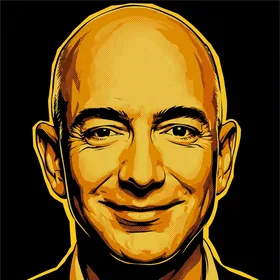
Jeff Bezos Started Amazon Because of a Walk in Central Park — And a Rule About Regret

Before there was Amazon, before the warehouses and the rockets and the trillion-dollar valuation, there was a guy with a good job on Wall Street and a boss who thought he was making a mistake.
“When I told my boss I was leaving, he took me on a long walk in Central Park. After a lot of listening, he finally said, ‘You know what, Jeff, I think this is a good idea, but it would be a better idea for somebody who didn’t already have a good job.’ He convinced me to think about it for two days before making a final decision. It was a decision I made with my heart and not my head. When I’m eighty and reflecting back, I want to have minimized the number of regrets that I have in my life. And most of our regrets are acts of omission — the things we didn’t try, the paths untraveled. Those are the things that haunt us. And I decided that if I didn’t at least give it my best shot, I was going to regret not trying to participate in this thing called the internet that I thought was going to be a big deal.”
— Jeff Bezos, Invent and Wander
It’s 1994. Jeff Bezos is a senior vice president at D.E. Shaw, a quantitative hedge fund in New York City. He’s thirty years old, well-compensated, and on a clear trajectory. Then he spots something: the internet is growing at 2,300% a year. He pitches an idea — an online bookstore — and his boss, after that long walk through Central Park, essentially tells him he’d be crazy to leave. The logic was sound. Why abandon a sure thing for something nobody understood? Bezos asked for two days to think. But the thinking he did wasn’t the spreadsheet kind. He projected himself forward to age eighty and asked a single question: What will I regret?
The answer was immediate. He wouldn’t regret trying and failing. He would regret never trying at all. His parents invested a large fraction of their life savings into a venture they didn’t understand — not because they believed in the internet, but because they believed in their son. That’s how Amazon began: with a heart-over-head decision, a framework for minimizing regret, and startup capital from two people betting on a person rather than a business plan.
What makes this moment so instructive isn’t just the origin story of Amazon. It’s the decision-making model Bezos reveals. Most people evaluate big choices by weighing the immediate risks: lost income, status, stability. Bezos inverted the frame entirely. Instead of asking “What could go wrong if I leave?” he asked “What will haunt me if I stay?” That single reframe — what he later called his “regret minimization framework” — cuts through the noise of short-term anxiety and forces you to confront what actually matters over the arc of a life. It’s worth noting that the framework didn’t guarantee success. Bezos has said himself that he thought there was a 70% chance Amazon would fail. But failure in pursuit of something meaningful didn’t register as a regret. Inaction did.
This connects to a broader pattern in Bezos’s thinking that runs through Invent and Wander: the willingness to be misunderstood for long periods of time. He built Amazon around long-term orientation — “you’re going to have a lot of failures along the way,” he wrote — and he adopted that same posture in his personal decisions long before the company existed. The walk in Central Park wasn’t a moment of recklessness. It was a moment of clarity about what kind of life he wanted to live when he looked back at eighty.
The Memo
-
Project forward, not outward. When facing a major decision, skip the pros-and-cons list. Instead, imagine yourself at eighty and ask which choice you’d regret not making. The things that haunt people aren’t the failures — they’re the untraveled paths.
-
Separate the risk of failure from the risk of inaction. Bezos gave himself a 30% chance of success. He left anyway. If the downside of trying is recoverable but the downside of not trying is permanent regret, the math is already done.
-
Recognize when a decision is heart-territory, not head-territory. Not every choice yields to analysis. When the data is genuinely uncertain — when nobody can tell you what the internet will become — trust the conviction that something matters enough to pursue, even imperfectly.