Ref. 61 · quick takes · Power reserve 2 min
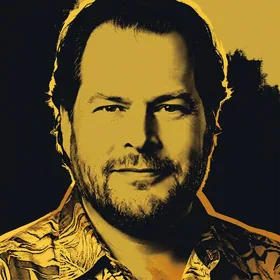
Marc Benioff’s Case for Loud Beliefs

Having values is easy. Expressing them in ways that actually matter — that’s the hard part most people skip.
“You can’t live your beliefs to the fullest unless you develop the imagination and the confidence to express them in bold, meaningful ways.”
— Marc Benioff, Trailblazer
Benioff wrote this reflecting on his mentors — including a grandmother who seized control of a family fur business after being abandoned, and another who drove him to odd jobs so he could buy his first computer. These weren’t people who quietly held convictions. They acted on them, visibly and decisively, even when the circumstances were stacked against them.
The insight here is deceptively simple but worth sitting with. Most professionals, founders, and leaders have beliefs about how the world should work — about fairness, about quality, about how to treat people. But having beliefs and living them are separated by two specific things Benioff names: imagination and confidence. Imagination because expressing values in “bold, meaningful ways” requires creativity — it’s not enough to write a mission statement and call it done. You have to invent new structures, new policies, new ways of showing up that make the abstract concrete. And confidence because putting your beliefs into the world invites scrutiny, disagreement, and risk. Quiet beliefs are safe. Loud ones cost something.
This is the thread that runs through Benioff’s career at Salesforce — from embedding philanthropy into the company’s business model from day one (the 1-1-1 model of donating 1% of equity, product, and employee time) to taking public stances on social issues long before it was fashionable for CEOs to do so. Whether you agree with every position he’s taken is beside the point. The principle stands: beliefs without expression are just thoughts. And expression without imagination is just noise.
The challenge for anyone building something — a company, a team, a career — is to close the gap between what you believe and what people can actually see you doing about it. That gap is where credibility lives or dies.