Ref. 252 · Single Quotes · Power reserve 3 min
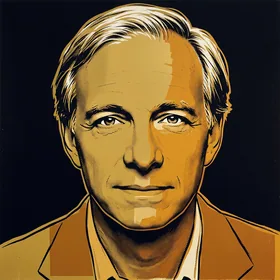
Ray Dalio’s Warning: The Pattern Every Empire Ignores Until It’s Too Late
History has a habit of humbling the confident. The most powerful empires, currencies, and systems in human history all shared one trait: the people living inside them could not imagine their end.
“Anyone who studies history can see that no system of government, no economic system, no currency, and no empire lasts forever, yet almost everyone is surprised and ruined when they fail.”
— Ray Dalio, Principles for Dealing with the Changing World Order
Dalio didn’t arrive at this conclusion from a classroom. He spent decades managing Bridgewater Associates — one of the world’s largest hedge funds — while watching governments, central banks, and investors repeatedly make the same mistakes. When he noticed that the economic conditions forming around him in the 2010s rhymed uncomfortably with patterns from the 1930s, he went deep into the historical record. What he found was a “Big Cycle” — a repeating arc that governs the rise and fall of reserve currencies, empires, and economic orders. Debt accumulates, productivity slows, internal divisions widen, and then comes the reckoning. The details change. The structure does not.
What troubled Dalio most was not the cycle itself — it’s that the warning signs are always visible in retrospect and almost always ignored in real time. People operating inside a dominant system develop a kind of structural blindness. The dollar has always been the reserve currency. Monetary policy has always worked. Democracy and capitalism have always prevailed. These feel like facts. Dalio’s point is that they are patterns — and patterns, by definition, break. His mission in writing about the Big Cycle was to give investors, policymakers, and ordinary people a framework to see the turn coming, rather than be “surprised and ruined” by it.
The business application here runs deeper than macroeconomics. Every founder builds inside a system — an industry structure, a technology platform, a regulatory environment — and unconsciously treats that system as permanent. The lesson Dalio draws from centuries of history is that the most dangerous word in strategy is “always.” The leaders and institutions that survive transitions are the ones who study the architecture of the current order closely enough to know when it’s under stress. That requires intellectual honesty most people find uncomfortable: acknowledging that the conditions that created your success may not be the conditions you’ll operate in tomorrow.
The Memo
-
Study the cycle, not just the moment. Before making long-term financial or strategic bets, map the broader forces at play — debt levels, productivity trends, internal cohesion. The context around your decision matters as much as the decision itself.
-
Treat “it’s always been this way” as a red flag, not a reassurance. When consensus is strongest is often when a structural shift is closest. Build the habit of asking what would have to be true for the dominant assumption to be wrong.
-
Prepare before the pattern breaks, not after. Dalio’s framework exists precisely because surprise is optional. Diversify across currencies, geographies, and asset classes not because crisis is certain, but because history says it is eventually inevitable.