Ref. 83 · Single Quotes · Power reserve 3 min
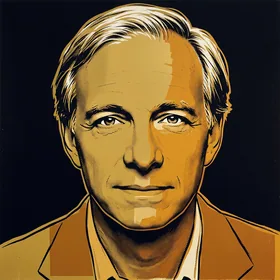
Ray Dalio’s Warning: No Empire, Currency, or System Lasts Forever — Yet We’re Always Surprised

Most people build their financial lives on assumptions so deeply embedded they’ve never been questioned. Ray Dalio spent decades questioning all of them — and what he found should unsettle anyone who thinks the current order is permanent.
“Anyone who studies history can see that no system of government, no economic system, no currency, and no empire lasts forever, yet almost everyone is surprised and ruined when they fail.”
— Ray Dalio, Principles for Dealing with the Changing World Order
Dalio arrived at this conclusion not through pessimism, but through pattern recognition. After the 2008 financial crisis exposed the limits of conventional economic models, he went back through centuries of historical records — studying the rise and fall of the Dutch, British, and American empires, the collapse of reserve currencies, and the debt cycles that preceded every major depression and revolution. What he found was a repeating arc: nations accumulate debt, productivity stagnates, internal divisions deepen, and then — almost without exception — the people living inside that arc are blindsided when it ends. Not because the warning signs weren’t there, but because they had mistaken familiarity for permanence.
The dollar has been the world’s reserve currency for Dalio’s entire life. Democracy and capitalism have been treated as the default settings of civilization. These aren’t facts about the future — they’re facts about a particular moment in a much longer cycle. Dalio’s discomfort isn’t academic. He explicitly states he began asking himself how he and the people he cares about would know when a depression, revolution, or war period was approaching — and how to navigate it. That personal urgency is what separates this analysis from typical macroeconomic commentary. It’s a survival framework dressed in the language of historical scholarship.
The insight cuts against one of the most powerful forces in human psychology: the assumption that what has always been true will continue to be true. Investors call this recency bias. Dalio calls it the primary reason people get ruined. When systems fail — whether they’re currencies, governments, or empires — the failure rarely looks like a dramatic Hollywood collapse. It looks like a slow drift that accelerates faster than anyone prepared for. The people who survive are not the ones who predicted the exact timing; they’re the ones who never confused the current arrangement with a permanent one.
For anyone building wealth, a business, or a long-term plan, the practical implication is uncomfortable but clarifying: the rules of the game you’re playing have changed before and will change again. Diversifying across currencies, geographies, and asset classes isn’t paranoia — it’s the historical baseline for anyone who has actually studied the history of money and power. Dalio’s framework doesn’t ask you to predict when things will break. It asks you to stop assuming they won’t.
The Memo
-
Study cycles, not just current conditions. The dollar, democracy, and the existing financial order are points on a historical arc — not permanent fixtures. Understand what has always eventually changed.
-
Treat surprise as a warning sign, not an excuse. When a system fails and you’re shocked, that shock is the real problem. Build portfolios, businesses, and plans that don’t depend on the current order lasting indefinitely.
-
Ask Dalio’s question for yourself: How would you know if you were entering a period of major disruption — and what would you do? Having a pre-built answer is the difference between navigation and ruin.