Ref. 155 · Single Quotes · Power reserve 3 min
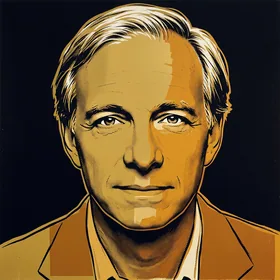
Ray Dalio’s Warning: The Three Forces That Have Collapsed Every Empire in History

Every great empire in history believed it was different — that the rules governing the rise and fall of civilizations somehow didn’t apply to it. Ray Dalio spent years studying why they were all wrong.
“The decline phase typically comes from internal economic weakness together with internal fighting, or from costly external fighting, or both. Typically, the country’s decline comes gradually and then suddenly.”
— Ray Dalio, Principles for Dealing with the Changing World Order, ch. Money, Credit, Debt, and Economic Activity
Dalio didn’t arrive at this conclusion from an armchair. As the founder of Bridgewater Associates — built from a two-bedroom apartment into one of the most powerful investment firms on the planet — he spent decades analyzing economic cycles, sovereign debt crises, and the structural forces that shape nations. In Principles for Dealing with the Changing World Order, he applied that same pattern-recognition discipline to a far larger question: why do empires rise, and what kills them? His answer wasn’t a single catastrophic event. It was almost always a slow convergence of the same three forces: debt, declining productivity, and internal conflict. The trigger varies. The formula doesn’t.
What makes Dalio’s framework more than historical commentary is where he points it next — at America. He is careful to note that the United States remains an extraordinarily powerful nation. But he sees the warning signs accumulating. Debt levels that would have been unthinkable a generation ago. Productivity growth that has stalled in key sectors. A cultural and political fracture that makes collective problem-solving increasingly difficult. He stops short of predicting collapse, but his point is precise: these are not abstract historical patterns. They are live variables, and ignoring them because past success felt permanent is exactly how previous superpowers made their fatal mistake.
The deeper principle here extends well beyond geopolitics. Dalio is describing a universal failure mode — one that applies to companies, teams, and individuals as much as to nations. Success breeds complacency. Complacency enables debt accumulation and productivity drift. Division follows when the spoils shrink and accountability disappears. The sequence is almost mechanical. What Dalio offers is not pessimism but diagnostic clarity: if you can name the forces that destroy, you can build systems to resist them. The leaders and investors who thrive through major transitions aren’t the ones who predicted the exact moment of change — they’re the ones who took the structural warning signs seriously long before the crisis became obvious.
The Memo
-
Track the three indicators, not just the headlines. Debt levels, productivity trends, and internal cohesion are the structural vitals that matter — in nations, companies, and teams. Monitor them deliberately rather than reacting to surface-level noise.
-
Treat past success as a liability if it breeds complacency. Every empire that fell believed its dominance was self-sustaining. Build the discipline to stress-test your position precisely when things are going well.
-
Prepare for change before the transition forces your hand. Dalio’s entire framework is designed to help readers position themselves ahead of major shifts. Study the cycle. Don’t wait for the crisis to make it legible.