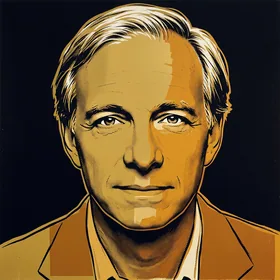
Dalio spent years building an index of national power — education, innovation, competitiveness, military strength, reserve-currency status — and fitting it to the last five hundred years. This book is the result.
The core claim
“All empires decline and new ones rise to replace them. Understanding when that change might happen requires watching all of the indicators and tracking the relative conditions of countries.”
— Ray Dalio, Principles for Dealing with the Changing World Order
The sequence
The mechanism is specific rather than gestural:
“The decline phase typically comes from internal economic weakness together with internal fighting, or from costly external fighting, or both. Typically, the country’s decline comes gradually and then suddenly.”
— Ray Dalio, Principles for Dealing with the Changing World Order Debt grows, productivity falls, internal conflict rises, the currency is debased to paper over the first three. Dalio traces that arc through the Dutch, the British and — the reason the book sold — the present-day United States.
Where to be sceptical
The method is the thing to examine. Dalio constructs the index, then demonstrates that history fits it. That is a different epistemic activity from prediction, and the book does not always mark the boundary clearly.
The pattern is real and the historical work is substantial. But a framework built by looking backwards will always fit backwards, and its forward claims deserve to be held loosely — including by readers who find the argument persuasive, which is most of them.