Ref. 149 · deep dives · Power reserve 12 min
What 4 Billionaires Really Think About Work Ethic and Discipline


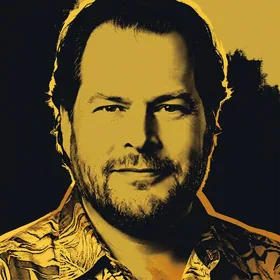
Work ethic is the one trait almost every self-made billionaire credits for their success — yet almost none of them define it the same way. Dig beneath the surface of how Richard Branson, Marc Benioff, Ray Dalio, and Oprah Winfrey talk about hard work and discipline, and a more nuanced, sometimes contradictory picture emerges. The through-line isn’t simply “work more.” It’s about what kind of work, directed by what kind of discipline, in service of what kind of purpose.
The Sine Qua Non: Why Work Ethic Comes Before Everything Else
The Latin phrase sine qua non — “without which, nothing” — captures how the most successful people treat work ethic. It isn’t one ingredient in a recipe. It’s the precondition for all the other ingredients to matter.
Marc Benioff has been explicit about this ordering. In Trailblazer, he draws on the philosophy of legendary coach Bill Walsh to articulate the foundational role of work ethic:
“So I cleared my mind, pulled out a blank sheet of paper, and formulated a few simple questions. What is the vision for what I want to achieve? That’s the first question that must be asked, because if you aren’t crystal clear on where you want to go, good luck trying to get there.”
— Marc Benioff, Trailblazer, ch. Beginner’s Mind: From a Blank Page to the Same Page
Notice the deliberate sequence: work ethic comes before strategy, before talent, before experience. This isn’t motivational posturing — it’s a structural claim about how success is built. Talent without work ethic is unrealized potential. Strategy without work ethic is a document that never gets executed.
Richard Branson arrives at the same conclusion from a more personal angle. In Screw It, Let’s Do It, he describes starting his days at 4am, driven by an almost competitive hunger: “I start my days at 4am, hungry for success, always willing to put the work in to make my dreams a reality.” More pointedly, he frames work ethic as the one variable you can actually control: “Your work ethic is the only thing you can control in life. And if you strengthen it, stretch it to its limit, and forge an unrivalled work ethic that burns inside of you, you will win.”
This is a striking claim, especially coming from an entrepreneur who has built hundreds of companies across wildly different industries. Markets shift. Competitors emerge. Economies contract. But the one lever that remains in your hands, according to Branson, is how relentlessly you show up.
Benioff adds an organizational dimension that Branson’s framing implies but doesn’t fully develop. A leader’s work ethic, Benioff argues, becomes the default standard for everyone around them: “Your staff sees your devotion to work, their people see them, and on through the organization.” The leader doesn’t just set the tone — they set the ceiling. And if that ceiling is low, no strategy or talent in the world will compensate.
Hard Work Is Necessary — But Not Sufficient
Here is where the consensus begins to crack open in interesting ways. While every voice in this conversation respects hard work, the more seasoned perspectives push back against treating busyness as a virtue in itself.
The most direct challenge comes from the source material informing the WEALTH framework, which identifies a trap that catches even ambitious, disciplined people:
“I was disciplined about work. I worked hard, even when I was not creating wealth. I fooled myself into thinking that if I was working hard, then I had character. When I was in my twenties and working at Morgan Stanley, it was the all-nighter that signified virtue. ‘How late were you here last night?’ was the chest-thumping challenge of the Hermès-suspender-wearing silverback we presented to the world.”
— WEALTH
This is a sharp observation. There’s a performance of work ethic — the all-nighter, the 4am alarm posted on social media, the meal-replacement shake that “saves” three minutes — that masquerades as the real thing. The author goes on to conclude that while working hard is necessary for personal and professional success, “it is not sufficient, and more important, it is not the point. Working hard by itself is just burning energy into the capitalist void.”
Ray Dalio’s philosophical framework in Principles reinforces this from a different angle. His concept of embracing reality means constantly interrogating whether the effort you’re expending is actually solving the right problem. “There is nothing more important than understanding how reality works and how to deal with it,” Dalio writes, framing each challenge as a puzzle to be solved — not simply endured through brute-force effort. The discipline he values isn’t just persistence; it’s the mental clarity to identify what actually needs doing and then execute it with precision.
The Work the System source captures what happens when hard work is not paired with this clarity — a chronic internal dialogue that many entrepreneurs will recognize: “There are things I must do right NOW, and there is barely enough time to do them. I will bulldoze my way through these tasks, and as usual they will be completed just in time — but the results will be of average quality and my body and mind will continue to be stretched to the breaking point.” This is hard work in its most self-defeating form: frantic, reactive, and ultimately unsustainable.
The distinction these sources collectively draw is between hard work as fuel and hard work as direction. Fuel without direction just burns. The billionaire work ethic, at its most refined, is about combining relentless effort with deliberate focus on what matters most.
Discipline as Direction: The Power of Purposeful Focus
If hard work is the engine, discipline is the steering wheel. And several of these thinkers are emphatic that discipline without a clearly defined destination is nearly useless.
The Stoic tradition, surfaced in Discipline Is Destiny, frames this precisely:
“Anyone who has not groomed his life in general towards some definite end cannot possibly arrange his individual actions properly.”
— Michel de Montaigne, quoted in Ryan Holiday, Discipline Is Destiny
Holiday follows it with the older version of the same thought — that if you do not know where you are sailing, no wind is favorable — which the Stoics got to some fifteen centuries before Montaigne did.
This insight echoes loudly when placed alongside the example of Booker T. Washington cited in the same text. Washington’s discipline wasn’t just about working hard — it was about having a purpose so clear that it became a filter. Because he knew exactly what he was working toward — educating a generation of Black men and women — he had the “clarity and the urgency to reject the things that stood to consume his time in the service of some other purpose.” Without that clarity, the text warns, anyone would be “eaten alive, his time and power picked apart, one request and distraction at a time.”
Oprah Winfrey’s perspective on discipline aligns closely here, though she approaches it from the angle of personal calling rather than Stoic philosophy. The source material connecting her worldview to work notes that Oprah argues “each of us has a personal calling” and that the “best way to succeed is to discover what you love and then find a way to offer it to others.” In What I Know for Sure, her understanding of discipline is expansive — it’s the bridge between inspiration and achievement, the mechanism that converts good intentions into actual results.
Discipline Is Destiny offers perhaps the most comprehensive definition of what real discipline looks like in practice:
“The ability to work hard, to say no, to practice good habits and set boundaries, to train and to prepare, to ignore temptations and provocations, to keep your emotions in check, to endure painful difficulties. Self-discipline is giving everything you have… and knowing what to hold back.”
— Ryan Holiday, Discipline Is Destiny
“Knowing what to hold back” is the part most hustle-culture narratives omit. True discipline isn’t maximum output in all directions simultaneously. It’s maximum output in the right direction, combined with strategic restraint everywhere else. This is the discipline that scales — the kind that builds empires rather than burning out founders.
Where Billionaires Diverge: Relentlessness vs. Reflection
The most interesting tension in this conversation isn’t between people who value work ethic and people who don’t. Everyone here values it. The divergence is between those who emphasize relentless forward motion and those who argue that regular strategic pauses are themselves a form of discipline.
Branson sits firmly in the relentless camp. His framing of the “single parent mother work ethic” — “being relentless, demanding more of yourself than anyone else could ever demand of you, knowing that every time you get tired, you can still do more” — is an ethos of sustained acceleration. The message is directional and motivational: don’t stop, don’t slow down, outwork everyone.
Dalio and the Road Less Stupid framework push in a different direction. Keith Cunningham’s Road Less Stupid dedicates an entire chapter to “The Discipline of Thinking Time” — the argument being that the most expensive mistakes in business come not from laziness but from failing to think carefully before acting. The discipline to sit still and think, in a culture that valorizes constant motion, is actually harder than the discipline to grind. As Cunningham’s framework puts it: “Ordinary things, consistently done, produce extraordinary results” — a philosophy that prioritizes consistent, thoughtful execution over dramatic bursts of heroic effort.
Dalio’s Principles framework reinforces this. His entire methodology is built around systematic reflection — treating every setback as a puzzle that generates a principle, then applying that principle going forward. This is discipline of a different texture than Branson’s 4am starts. It’s slower, more deliberate, more iterative. But over 42 years of building Bridgewater, it proved extraordinarily durable.
Neither approach is wrong. The Branson model may be better suited to the early, chaotic stages of building something — when momentum matters more than optimization. The Dalio model may be better suited to sustained, long-term compounding. The most self-aware entrepreneurs probably know which mode they’re in and choose their discipline accordingly.
Work Ethic as Identity — and Its Dangers
One thread running quietly through several of these sources is a warning about what happens when work ethic becomes identity rather than tool. The Work, Work, Work source traces a cultural history of this conflation — from Protestant work ethic to modern hustle culture — noting that when work becomes an end in itself, the original wisdom gets lost:
“Religious scholars point out that the Protestant ‘work ethic’ is more than a blind obsession with work. It is paired with thrift, self-discipline, and humility. Yet as fewer people look to religion for wisdom on how to navigate life, they are only left with the watered-down version of these views.”
— Work, Work, Work
The watered-down version is pure output obsession — hours logged, sacrifices made, exhaustion worn as a badge of honor. What gets stripped away is the “why”: the thrift that asks whether the work is generating real value, the humility that asks whether you’re the right person to be doing it, and the self-discipline that asks whether the habits you’re building are actually serving your goals.
Oprah’s formulation in What I Know for Sure reframes work ethic in a way that answers this concern. Her understanding that “what I think, what I say, what I do — everything will be returned to me” isn’t just a spiritual observation. It’s a quality filter. Work done with integrity, intention, and alignment with your actual values compounds differently than work done simply to signal status or avoid the discomfort of stillness.
Benioff’s Trailblazer carries a similar implication. His emphasis on inclusive workplaces, values-driven leadership, and business as a platform for change suggests that the work ethic he’s advocating isn’t disconnected from purpose — it’s inseparable from it. Working hard at the right things, in service of a vision larger than yourself, is the version of work ethic that Benioff has built Salesforce around.
Synthesis
Taken together, these perspectives form something more sophisticated than a simple “work harder” argument. The billionaire consensus on work ethic and discipline has several distinct layers. First, a baseline: hard work is non-negotiable. No strategy, talent, or timing advantage compensates for a deficit in genuine effort. Second, a filter: hard work without direction is expensive noise. The discipline that matters most is the discipline to identify your actual priorities — and then ruthlessly protect them from everything else. Third, a warning: when work ethic becomes performance or identity, it stops generating value and starts generating burnout. The goal isn’t to work the most hours. The goal is to work the right hours, with the right focus, in service of the right purpose.
What makes this synthesis genuinely useful is the disagreement embedded within it. Branson’s relentlessness is real and earned — but it exists within a context of natural entrepreneurial passion that makes the work feel less like discipline and more like compulsion. Dalio’s systematic reflection sounds slower, but it’s the mechanism that prevents the kind of expensive mistakes that erase years of hard work overnight. Oprah’s insistence on personal calling reframes the question entirely: when your work is aligned with who you are and what you value, the discipline required diminishes because the motivation is intrinsic. The billionaires who last don’t just work hard. They work hard on the right things, they build systems to protect that focus, and they do it in a way that they can sustain — not just for a quarter, but for decades.
The Memo
-
Treat work ethic as the precondition, not the strategy. Before tactics, talent, or timing, your willingness to outwork the problem determines whether anything else gets the chance to matter.
-
Audit whether your hard work is creating value or just activity. Busyness is not a proxy for progress — and mistaking one for the other is one of the most common and costly errors ambitious people make.
-
Define your destination before demanding discipline of yourself. Discipline without direction is effort without output. Get clear on what you’re actually sailing toward, then use that clarity to filter every demand on your time.
-
Set your personal standard visibly, then let it cascade. As a leader, your work ethic is the ceiling for everyone around you. The trickle-down effect is real — make sure what’s trickling down is worth replicating.
-
Build in structured thinking time as a non-negotiable discipline. The most expensive decisions are often the ones made reactively, without pausing to think. Protecting space for deliberate reflection is as important as protecting time for execution.
-
Separate hard work from hard-work performance. The all-nighter, the 4am post, the productivity theater — these signal effort but don’t guarantee results. Do the work; let the results speak.
-
Anchor your work ethic to a purpose larger than productivity. The discipline that compounds over decades isn’t fueled by fear or status-seeking — it’s fueled by alignment between what you do every day and what you actually believe matters.