Ref. 122 · Single Quotes · Power reserve 2 min
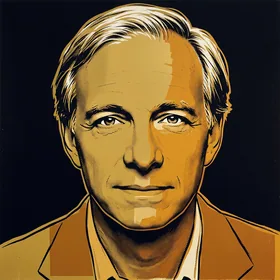
Ray Dalio’s Warning: Why Nations Fall the Same Way Companies Do
Most people think empires collapse because of outside threats. Dalio spent years studying the data and found the real danger almost always comes from within.
“When you take away freedoms, and when people are no longer choosing of their own freewill to support the betterment of society, then that society crumbles.”
— Ray Dalio, Principles for Dealing with the Changing World Order
Dalio didn’t arrive at this conclusion through ideology. He arrived at it through pattern recognition. After mapping the rise and fall of reserve currencies and great powers across centuries, he noticed the same sequence playing out again and again: extreme debt loads, declining productivity, and deepening internal division. Not invasion. Not natural disaster. Self-inflicted fractures. In the book, he draws a direct parallel between how nations fail and how businesses fail — the mechanics are nearly identical.
The insight sharpens when you consider what Dalio sees as the engine of any great society: voluntary participation. When people genuinely believe the system works for them, they contribute to it. They build, invest, and cooperate. But when that belief erodes — when the distribution of outcomes feels rigged, or freedoms feel conditional — the social contract quietly dissolves. Coercion can hold things together for a while. Voluntary buy-in is what makes them thrive.
This principle translates directly to how organizations are built and broken. A team that follows rules out of fear performs to the floor. A team that believes in the mission performs beyond the ceiling. Dalio built Bridgewater on exactly this logic — radical transparency and idea meritocracy as tools for making people want to participate, not just comply. The same force that holds a civilization together holds a company together: the sense that the system is honest and that your contribution actually matters.
The practical edge here is diagnostic. When you see cynicism spreading in an organization — or a country — Dalio’s framework suggests the question to ask isn’t “how do we enforce compliance?” It’s “why have people stopped choosing to contribute?” That’s a harder question, but it’s the right one. Coercive systems can suppress the symptom. Only trust repairs the underlying condition.
The Memo
-
Audit voluntary participation. In any organization you lead, ask honestly: are people here because they believe in what’s being built, or because they have no better option? The answer tells you more about long-term durability than any performance metric.
-
Treat internal division as a leading indicator. Dalio’s historical data shows that social fragmentation precedes collapse — it doesn’t follow it. Don’t wait for the crisis to address the fractures.
-
Build systems people choose, not systems people endure. Transparency, fairness, and genuine meritocracy aren’t soft values — they’re the structural load-bearing walls of any institution built to last.