Ref. 132 · Contrarian Takes · Power reserve 2 min
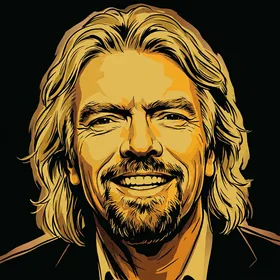
Richard Branson Hates ‘Thinking Outside the Box’ — Here’s What He Does Instead

Most business advice tells you to think outside the box. Richard Branson thinks that’s already too late.
“You’ll never have to think outside the box if you refuse to let anyone build one around you.”
— Richard Branson, The Virgin Way
Branson opens The Virgin Way with a confession that sets the tone for everything that follows: he has never read a book on leadership in his life. He dropped out of school at sixteen, has never worked for anyone but himself, and built Virgin into one of the most recognizable brands on earth by treating conventional wisdom as optional. The “thinking outside the box” phrase, he says, is one he despises — not because the sentiment is wrong, but because it concedes too much. It assumes the box was a reasonable starting point.
For Branson, the box itself is the problem. Industries build boxes. Committees build boxes. Hierarchies, job titles, industry norms, and received wisdom all build boxes — and the moment you accept one as your frame of reference, you’ve already constrained what’s possible. His entire career, from launching a student magazine as a teenager to betting on commercial space travel with Virgin Galactic, has been a refusal to let any industry define the rules he plays by. He didn’t try to out-airline British Airways; he reimagined what flying could feel like. He didn’t tweak the cola formula; he challenged the category entirely.
The practical implication here is more radical than it sounds. Most organizations reward people for working within established frameworks and then occasionally celebrate a “creative” idea that bends one of the rules. Branson is arguing for something upstream of that: question whether the framework itself should exist. The leaders and founders who change industries rarely do so by solving the puzzle everyone else is working on — they walk into a different room. That only happens if you resist, from the very beginning, the pressure to be categorized, to fit a model, to operate within someone else’s definition of your market.
The Memo
-
Reject the premise before you solve the problem. Before your team brainstorms solutions, ask whether the constraints you’re working within are real — or just inherited assumptions nobody has bothered to question.
-
Define your own category or someone else will define it for you. The moment you accept an industry’s standard playbook, you’ve handed your competitors a map of exactly how you’ll compete. Branson’s advantage was consistent category disruption, not incremental improvement.
-
Pursue what genuinely excites you, and let that filter out the boxes. Branson’s rule is simple: if a new project doesn’t get his creative energy moving, he passes. Passion for the work is what keeps you from defaulting to the safe, pre-approved version of an idea.
Correction, 30 September 2026: an earlier version quoted this passage in altered wording. It now matches the book word for word.