Ref. 105 · Single Quotes · Power reserve 2 min
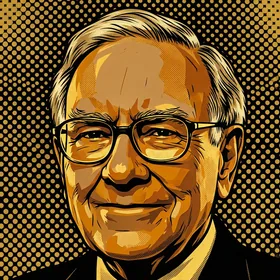
Warren Buffett’s Most Honest Admission: The Worst Year of His Tenure, in His Own Words

Most CEOs dress up a bad year. Warren Buffett did the opposite — he handed his shareholders a magnifying glass and pointed it directly at the damage.
“We had the worst absolute performance of my tenure and, compared to the S&P, the worst relative performance as well.”
— Warren Buffett, Berkshire Hathaway Shareholder Letter 1999
By the close of 1999, the dot-com bubble had made Buffett look like a relic. Berkshire’s per-share book value had grown just 0.5% while the S&P surged. Yahoo! — a company with minimal earnings — was valued at $115 billion. Barron’s put Buffett on its cover with the headline “Warren, What’s Wrong?” The technophiles were circling. Buffett, who had refused to buy into internet stocks he didn’t understand, had slipped to fourth on the world’s richest list. The narrative was clear: the old man had finally lost his edge.
Rather than deflect, Buffett opened his 1999 shareholder letter by calling it exactly what it was — the worst year of his tenure, in both absolute and relative terms. Naming both measures, with no qualifier attached, was Buffett doing what he always insisted companies should do: tell shareholders the truth, plainly, even when the truth is embarrassing. He had spent years criticizing management teams who used accounting tricks and careful language to obscure bad results — what he’d elsewhere describe as asking a doctor to “touch up the x-rays” rather than face the diagnosis.
The deeper principle here is one most leaders never master: radical transparency is a long-term asset, not a short-term liability. Buffett knew that the same investors reading his 1999 letter had read his letters from 1964 through 1998 — letters full of honest accounting, clear reasoning, and accurate predictions. One bad year, called out with brutal honesty, only strengthened that trust. He didn’t need to spin the results because he had spent decades building a reputation that could absorb a single hard year. Contrast that with the management teams who smooth over one bad quarter, then another, until the gap between reality and reported reality becomes a crater. Buffett’s willingness to say “we failed” is precisely why shareholders believed him when he said “we’ll recover.”
The Memo
-
Name the bad year before someone else does. Candor in a down period costs nothing and builds the kind of credibility that compounds over time — just like capital.
-
Resist the pressure to chase what’s working right now. In 1999, the entire market told Buffett he was wrong. He held his position, and history did the rest.
-
Measure your own performance honestly, including relative results. Buffett wasn’t satisfied by positive absolute returns if the benchmark beat him — a discipline that keeps complacency from disguising itself as success.
Correction, 29 September 2026: an earlier version of this memo quoted Buffett’s 1999 letter with a final sentence about Inspector Clouseau that we cannot verify against the letter’s text. The quote now stops where the verified text does, and the prose that relied on that sentence has been rewritten.