Ref. 242 · deep dives · Power reserve 12 min
How 4 Billionaires Approach Negotiation and Deal-Making — And Where They Sharply Disagree


Negotiation is where fortunes are made or surrendered. The difference between a transformative deal and a costly mistake often comes down to a handful of decisions made under pressure — how honest to be, how hard to push, when to walk away. Billionaires who built empires from scratch didn’t just stumble into good deals; they developed distinct philosophies about how power, information, and relationships interact at the bargaining table. Those philosophies, taken together, reveal a surprisingly complex and sometimes contradictory picture of what deal-making actually requires.
Directness as a Competitive Weapon
Sam Zell built one of the most successful real estate empires in American history, and he credits much of it to a negotiating posture that most people find uncomfortable: radical bluntness. His book’s title is itself a negotiating statement — a punchline he delivers when he thinks his counterpart hasn’t grasped what he’s just said.
“No one has ever left a meeting with me wondering what I meant. When I say something it is clear, candid, and often blunt. ‘Am I being too subtle?’ is my punch line when I deliver a message I consider obvious.”
— Sam Zell, Am I Being Too Subtle
Zell’s directness isn’t rudeness for its own sake — it’s a strategic choice. Ambiguity in negotiation costs time, creates false expectations, and allows counterparts to hear what they want rather than what you mean. By eliminating that fog upfront, Zell accelerates the process and forces the other party to deal with reality. His stated commitment to honesty reinforces this: “I am nothing if not honest. If it comes out of my mouth, it’s the truth. Deal with it.”
This posture carries real risk. Bluntness can rupture relationships, offend counterparts, and occasionally cost you a deal that more diplomatic maneuvering might have saved. But Zell’s position is that the alternative — managing perceptions, softening hard truths, performing warmth you don’t feel — is both exhausting and ultimately deceptive. For someone doing hundreds of high-stakes transactions over decades, he made a calculated bet that consistency and clarity would outperform charm.
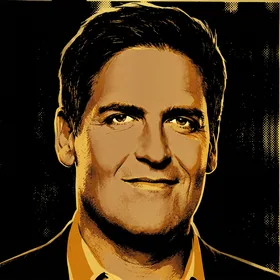
Mark Cuban takes a compatible view from a different angle. His framing of business as perpetual competition — “7 x 24 x 365 x forever” — implies that negotiations aren’t isolated events to be won once. They’re recurring encounters in an endless contest, which means your reputation for straight-dealing compounds over time just like interest on capital.
Information Is the Real Leverage
While Zell and Cuban emphasize mindset and directness, a recurring theme across expert negotiation literature is that information — specifically, what you know that your counterpart doesn’t, and what they know that you don’t — is the most decisive form of leverage at the table.
John D. Rockefeller understood this viscerally, even as a teenager. His early recollections describe navigating complex multi-party freight disputes involving railroads, canal operators, and lake boat carriers. What strikes him in retrospect isn’t the toughness of those negotiations but the intellectual challenge of identifying where each party’s real interests lay.
“One particular kind of negotiation came to me which took all the skill I could master to bring to a successful end… The cost of losses or damage had to be somehow fixed between these three different carriers, and it taxed all the ingenuity of a boy of seventeen to work out this problem to the satisfaction of all concerned.”
— John D. Rockefeller, Random Reminiscences of Men and Events
Rockefeller’s emphasis on satisfying “all concerned” is notable. This isn’t the language of a zero-sum operator. It reflects an understanding that multi-party negotiations require each party to leave with something — not because fairness is a virtue in the abstract, but because agreements that leave one side feeling cheated tend to collapse or generate costly friction later.
The information dimension of negotiation also explains one of Peter Thiel’s core business insights, even though he approaches the subject from a startup strategy perspective rather than a transactional one. In Zero to One, Thiel argues that true competitive advantage comes from possessing knowledge — about technology, markets, or human behavior — that others don’t have. Applied to negotiation, this maps directly: the party with superior information about what the deal is actually worth, what alternatives exist, and what the other side truly needs is the party with structural leverage, regardless of relative size or reputation.
“Every moment in business happens only once. The next Bill Gates will not build an operating system. The next Larry Page or Sergey Brin won’t make a search engine… If you are copying these guys, you aren’t learning from them.”
— Peter Thiel, Zero to One
The implication for deal-making is significant: if your negotiating position is built on the same information your counterpart has — comparable transactions, market rates, public benchmarks — you have no edge. The deals that create disproportionate value are ones where one party understands something the other doesn’t. Thiel’s entire investment thesis is built on finding and exploiting those asymmetries before they become common knowledge.
The Long Game: Relationships vs. Extraction
One of the sharpest fault lines in how successful people think about negotiation runs between those who treat each deal as an isolated transaction to be maximized and those who treat it as one move in a longer relationship game. The evidence suggests the latter approach tends to outperform over time — but it requires resisting short-term temptations that feel like wins.
The tension is illustrated starkly in the case of Derek Sorenson, a sports team negotiator who extracted a concession from a player’s agent by simply refusing to budge on salary despite the agent’s legitimate comparables. On paper, Sorenson won. In practice, something corrosive happened.
Sam Walton’s entire commercial philosophy cuts against extraction-based deal-making. His relationships with suppliers were hard-nosed on price — he was legendary for squeezing costs — but they were also built on consistency, transparency, and the understanding that a supplier driven out of business serves no one. Walton’s approach was to be the toughest customer in the room while remaining one that suppliers actually wanted to keep. That combination — demanding but reliable — is itself a negotiating posture, one that trades short-term concessions for long-term partnership stability.
Sam Zell, despite his bluntness, arrives at a similar place through different means. His commitment to clear communication isn’t just about efficiency; it’s about not leaving counterparts with false impressions that will generate resentment when reality emerges. A deal built on clarity, even a tough one, tends to stick. A deal built on managed perceptions tends to unravel.
Knowing Your Style — and Theirs
Perhaps the most practically underappreciated dimension of negotiation is self-knowledge: understanding not just what you want, but how your personality shapes the way you pursue it — and how that lands on the other side of the table.
The negotiation literature identifies distinct personality types that approach the bargaining table with fundamentally different instincts around compromise, fairness, honesty, and combat. Some treat negotiation as collaboration. Others treat it as battle. Neither approach is universally superior, but a mismatch between your style and the situation — or between your style and your counterpart’s — can derail deals that should have closed easily.
“Your personal negotiation style — and that of your counterpart — is formed through childhood, schooling, family, culture, and a million other factors; by recognizing it you can identify your negotiating strengths and weaknesses (and those of your counterpart) and adjust your mindset and strategies accordingly.”
— Chris Voss, Never Split the Difference
Zell’s self-awareness about his own style is evident throughout Am I Being Too Subtle. He doesn’t pretend to be warmer than he is or soften his directness to make counterparts comfortable. But that self-awareness is itself a form of preparation — he knows how he comes across, and he’s made peace with the deals that style costs him because he understands what it gains him in others.
Mark Cuban’s framing of business as sport reflects a similarly assertive style — competitive, energized by the pressure of the clock, drawn to the decisive moment. That temperament serves him in certain negotiations and is a liability in others. The self-awareness to know which context you’re in — and to modulate accordingly — is what separates instinct from strategy.
Peter Thiel’s negotiating style, inferred from Zero to One, appears more cerebral and asymmetric. He is looking for situations where he has unique information or a unique capability that others don’t yet recognize. That’s a different kind of negotiating power — not dominance at the table, but the structural advantage of knowing something your counterpart doesn’t before you sit down.
Preparation, Alternatives, and the Psychology of Leverage
Across every source, one principle surfaces consistently: preparation is the non-negotiable foundation of effective negotiation. Not just knowing what you want, but understanding your alternatives, your counterpart’s constraints, and the hidden information that could shift the entire dynamic of the deal.
Rockefeller’s early lesson was that the complexity of a negotiation — multiple parties, competing interests, unclear responsibility — is not a problem to be avoided but a puzzle to be solved. The party willing to do the analytical work of understanding everyone’s position walks in with an advantage that no amount of in-the-moment charm can replicate.
Sam Zell’s emphasis on knowing his options before entering any negotiation aligns directly with the classical negotiation concept of BATNA — Best Alternative to a Negotiated Agreement. His position: “I have to know my options so I don’t get pushed past them.” This matters because leverage in negotiation isn’t primarily about aggression or personality. It derives from your ability to credibly walk away — which is only possible if you’ve done the work to develop and understand your alternatives beforehand.
Thiel adds a counterintuitive dimension here. His argument in Zero to One is that the most powerful position in any competitive situation is one of genuine uniqueness — a product, idea, or capability that has no direct substitute. If you can create that position before you enter a negotiation, you’ve already won the most important part of it. The deal itself becomes a formality. This is why Thiel’s companies aim for monopoly-like positions: not just to extract rents, but to negotiate from a position of irreplaceability.
“But every time we create something new, we go from 0 to 1. The act of creation is singular, as is the moment of creation, and the result is something fresh and strange.”
— Peter Thiel, Zero to One
Applied to deal-making, this is a profound reframe: the best negotiation is one where you’ve made yourself genuinely hard to replace before the negotiation begins. Walton understood a version of this too — his scale and distribution capability made Walmart a partner that suppliers couldn’t afford to lose, which gave him pricing leverage that had nothing to do with what happened in the room.
Synthesis: The Pattern Beneath the Styles
What emerges from setting these perspectives side by side is that the most effective negotiators — whether they’re real estate rebels like Sam Zell, retail revolutionaries like Sam Walton, or venture iconoclasts like Peter Thiel — share a handful of structural commitments even when their surface styles differ dramatically. They invest in information asymmetry before they sit down. They know their own style well enough to deploy it deliberately rather than react from instinct. They treat deals not as isolated extractions but as moves within longer games. And they understand that the cleaner and more honest the deal, the more durable the outcome.
Where they diverge is instructive too. Zell bets on bluntness where others might manage the relationship more carefully. Thiel bets on structural uniqueness where Cuban bets on relentless competitive energy. Walton built leverage through scale and partnership longevity. None of these approaches is universally correct — each fits the personality, industry, and deal type it emerged from. The meta-lesson is that negotiation is not a universal technique to be applied uniformly. It is a set of principles to be adapted by someone with genuine self-knowledge, rigorous preparation, and a clear-eyed view of what a good outcome actually looks like for everyone at the table.
The Memo
-
Prepare on information, not just position. The party that understands everyone’s true interests — including their counterpart’s alternatives and constraints — walks in with structural leverage that personality alone can’t replicate.
-
Build irreplaceability before you negotiate. Thiel’s insight applies directly to deal-making: the strongest negotiating position is one where you’ve made yourself genuinely difficult to substitute before you enter the room.
-
Communicate with clarity, not comfort. Zell’s bluntness isn’t a personality quirk — it’s a strategy for eliminating ambiguity that creates false expectations and costly misunderstandings downstream.
-
Treat each deal as a move in a longer game. Extracting maximum value from a single transaction at the cost of the relationship tends to backfire; deals built on mutual clarity tend to stick and generate future opportunities.
-
Know your negotiating style — and recognize the other side’s. Assertive, accommodating, and analytical styles each have distinct strengths and blind spots; misreading the dynamic costs deals that should have been straightforward.
-
Develop real alternatives before you need them. Zell’s rule — know your options so you don’t get pushed past them — is the practical foundation of credible leverage; without a genuine walk-away position, you’re negotiating from weakness regardless of how you perform at the table.
-
Value durability over cleverness. The cleverest deal in the room isn’t always the best one; agreements that leave both parties feeling the outcome was honest and fair tend to generate less friction, fewer renegotiations, and stronger long-term relationships.