Ref. 60 · Single Quotes · Power reserve 3 min
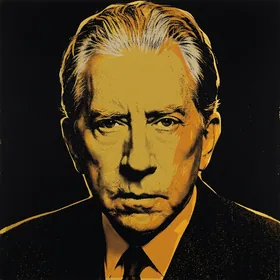
J. Paul Getty’s Unvarnished Truth About a Life Spent in the Arena

Most people who accumulate extraordinary wealth late in life tend to soften the edges of their story — smoothing out the roughness, polishing the narrative for posterity. J. Paul Getty, writing the final words he would ever publish, did the opposite.
“I have brawled with oilfield roustabouts (I was once one myself), fought even fiercer battles in panelled boardrooms — and chatted amiably with ruling monarchs in their audience chambers. I cite such random, extreme contrasts solely to suggest the broad range of experience from which my opinions and perspectives have developed.”
— J. Paul Getty, As I See It
Getty wrote those words in the author’s note of As I See It, his final autobiography, published in 1976 — the same year he died. He was 83 years old, one of the richest men on earth, and he chose to open his book not with a balance sheet or a list of acquisitions, but with a confession: he had been a roustabout. A brawler. Someone who had occupied the very bottom rung of the oil industry before climbing to the very top. The book was his last public act, and he used it to frame six decades of business experience not as a triumph of genius, but as a product of range — of having seen the world from radically different positions.
What Getty understood, and what many business leaders forget, is that credibility doesn’t come from titles. It comes from contrast. The executive who has never worked a factory floor sees the business differently than one who has. The investor who has never been broke calculates risk differently than one who has lost everything. Getty’s willingness to claim the roustabout years alongside the royal audiences wasn’t modesty — it was a statement of competitive advantage. The breadth of his experience wasn’t incidental to his success. It was his success. Every perspective he gained from a different vantage point became another lens through which to evaluate deals, people, and risk.
There’s a tendency in business culture to specialize early, to build a narrow identity and stay in lane. Getty’s life argues for the opposite. He moved between wildcat oil fields and European art galleries, between rough-and-tumble negotiations in the Middle East’s Neutral Zone and genteel conversations in English country estates. Each world taught him something the others couldn’t. And rather than hiding the rougher chapters, he led with them — because he knew that the full spectrum of experience was the real asset.
The Memo
-
Collect vantage points, not just victories. The most valuable thing you can build in a career isn’t a perfect résumé — it’s a wide range of lived experience that gives you pattern recognition others lack.
-
Claim your roustabout years. Don’t sanitize your story. The messy, low-status phases of your career often teach you more than the polished ones. Own them — they’re a source of judgment, not embarrassment.
-
Let contrast sharpen your thinking. Deliberately seek out environments and people that are radically different from your current position. The gap between those worlds is where original insight lives.