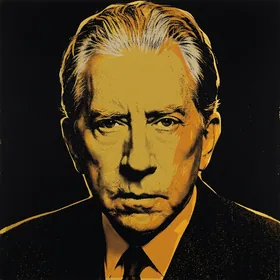
As I See It was published after Getty’s death and is the more personal of his two books. Where How to Be Rich argues for a way of running a business, this one circles what the resulting fortune was for.
The answer he lands on
It is not his own; it is his father’s, and he quotes it as the thing he cannot forget:
“George F. Getty Sr.’s credo was that money should be used, put to work in business enterprises that produced goods and services, provided gainful employment for others and contributed to the progress and welfare of society. He lived and labored by that credo. I am into my eighth decade of life. I can only hope that I have lived up to his example.”
— J. Paul Getty, As I See It The hedge in the last sentence is the most human line in either of his books.
On being thought rich
He is unexpectedly good on the practical absurdity of the reputation:
“The public seem to jump to the conclusion that my fortune, or a big part of it, is in cash. They don’t stop to think that my money is invested in business since I am an active businessman, and it is generally true that active businesses are short of cash for their business requirements.”
— J. Paul Getty, As I See It Written in a chapter about the volume of letters asking him for money.
Where to be sceptical
A posthumous autobiography is the one format in which an author could settle accounts, and Getty largely declines to. The estrangements from his sons, the five marriages, and the episode that most defines him publicly — the refusal to pay his grandson’s ransom until it was negotiated down — are handled thinly or not at all.
The result is a book that is candid about the inconvenience of wealth and quiet about its costs to the people around him. Read alongside How to Be Rich, the pair describe a man far more comfortable explaining a business than a life.