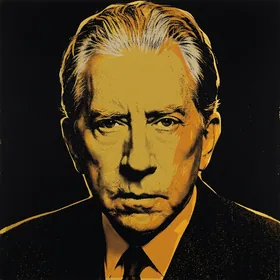
Getty’s book is not a wealth manual despite its title. It is an argument that the person who owns the business should run it, written by someone who thought professional management was making American companies timid.
What a businessman is for
“The businessman should never lose sight of the central aim of all business — to produce more and better goods or provide more and better services to more people at lower cost.”
— J. Paul Getty, How to Be Rich Plain, and more demanding than it looks: it is a claim that scale and price are the measure of usefulness, not margin.
On risk, with the ledger attached
“A businessman must be willing to take risks — to risk his own capital and to lose his credit and risk borrowed money as well when, in his considered opinion, the risks are justified. But borrowed money must always be promptly repaid.”
— J. Paul Getty, How to Be Rich The second sentence is the constraint the first depends on, and it is the half usually dropped when this is quoted.
The passage that makes him credible
“My 1932 bobble in turning down the Iraqi oil concession illustrates another blunder frequently made by businessmen — namely, their reluctance to take risks. A businessman has to be willing to take risks. They may be planned and calculated, but they’re risks just the same.”
— J. Paul Getty, How to Be Rich He is arguing from his own worst call, decades later, in print. That is the most useful thing in the book.
Where to be sceptical
The register is 1965 — “the businessman” is assumed male throughout, and the political anxieties are of their moment. Getty is also entirely silent on the personal life that made him famous, which makes this a book about a role rather than a person.
A note on the title. How to Be Rich is routinely confused with Felix Dennis’s How to Get Rich, published forty years later. Passages from Dennis — including a well-known line about boldness and Goethe — circulate widely as Getty’s. This archive carried two of them until recently.