Ref. 38 · versus · Power reserve 5 min
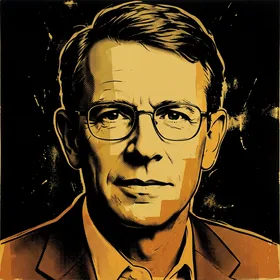
John Doerr vs. Marc Benioff: Rigid Measurement vs. Values-Led Navigation


How should a leader decide what matters most — by measuring everything with precision, or by letting a deeper set of values guide the way? John Doerr built his reputation evangelizing a system of Objectives and Key Results that reduces ambiguity to numbers. Marc Benioff built Salesforce by insisting that purpose and integrity come first, trusting that the right metrics would follow. Both approaches have produced extraordinary companies. The question is which compass you reach for when the path gets foggy.
John Doerr: An Accountable Culture
“Peak performance is the product of collaboration and accountability. An OKR culture is an accountable culture. You don’t push toward a goal just because the boss gave you an order. You do it because every OKR is transparently important to the company, and to the colleagues who count on you.”
— John Doerr, Measure What Matters, ch. Connect: The Intuit Story
Doerr’s entire philosophy can be distilled into a conviction that clarity of measurement produces clarity of action. The OKR framework he championed — first at Intel under Andy Grove, then at Google, and eventually across hundreds of organizations — rests on a simple premise: if you can’t express your goal as a concrete, time-bound metric, you don’t really have a goal. You have a wish.
The power of this approach is its ruthless prioritization. Doerr’s argument is that effort is rarely the binding constraint — teams fail because they are not measuring the right things, and therefore not managing them. By transparently setting objectives and defining key results, teams gain alignment. Everyone can see what the organization considers important, and just as critically, what it has chosen to deprioritize. The system is built to eliminate ambiguity: you either hit the number or you don’t. There’s no hiding behind vague declarations of progress. For Doerr, the act of choosing what to measure is itself a strategic act — perhaps the most important one a leader performs.
This creates a culture of accountability that compounds over time. When Google adopted OKRs early in its history, the framework gave a fast-growing company a shared language for setting priorities across teams that barely knew each other. The discipline of writing down objectives — and making them visible to the entire organization — prevented the kind of drift that kills startups scaling into large enterprises. Doerr’s bet was that transparency plus measurement equals execution. The track record suggests he was right.
Marc Benioff: Integrity Is the Path
“The funny thing about values is that their impact is not always quantifiable — even for a company as obsessed with data as we are. When people have a good experience, they’re not even aware that in a parallel universe, it might have been a bad one.”
— Marc Benioff, Trailblazer, ch. Beginnings: The Benioffs of San Francisco
Benioff doesn’t dismiss metrics — Salesforce is, after all, a company that sells tools to help businesses measure their own customer relationships. But his leadership philosophy starts somewhere fundamentally different from a spreadsheet. For Benioff, the first question isn’t “What should we measure?” but “What do we stand for?” He has consistently argued that values — trust, customer success, innovation, equality — are the real operating system of a company. Get those right and the numbers follow. Get them wrong and no amount of measurement will save you.
This conviction led Benioff to make decisions that would look irrational through a pure metrics lens. He championed the 1-1-1 philanthropic model — pledging 1% of Salesforce’s equity, product, and employee time to charitable causes — from the company’s earliest days, when every dollar and every hour of engineering time could have been directed toward growth targets. He publicly took stances on social issues that risked alienating customers. In a framework obsessed solely with key results, these moves would be hard to justify. But Benioff’s argument is that a values-led company attracts better talent, earns deeper customer loyalty, and builds a brand that compounds in ways no quarterly OKR can capture. The path of integrity, in his view, isn’t a detour from business performance — it’s the most direct route to it.
Where Doerr’s system provides a map with precise coordinates, Benioff offers a compass oriented to true north. The compass doesn’t tell you exactly how far you’ve walked or whether you’ll arrive by Friday. But it ensures that every step, even the unexpected ones, moves in a direction you can defend — to your employees, your customers, and yourself.
The Tension
The real disagreement here isn’t about whether measurement matters or whether values matter. Both leaders would agree that you need both. The tension is about sequence — what comes first when you’re building a culture and making hard decisions.
Doerr’s framework assumes that if you get the measurement system right, the right behaviors emerge. Define the objective, quantify the key results, make them transparent, and people will self-organize toward what matters. It’s a mechanistic view, and its strength is scalability: OKRs work whether you have 50 people or 50,000. Benioff’s approach assumes that if you get the values right, the right priorities emerge — and the measurements you choose will naturally reflect those values. Its strength is resilience: when the market shifts or a crisis hits, a team anchored to clear values can navigate without waiting for new targets to be set from above.
The danger of Doerr’s approach, taken to its extreme, is optimizing for the wrong thing. If you measure revenue growth without anchoring it to a value like customer trust, you can hit every key result and still hollow out your company. The danger of Benioff’s approach is vagueness. Values without metrics can become platitudes — feel-good posters on the wall that don’t change anyone’s Tuesday morning. The leaders who build the most enduring organizations tend to use both: values to decide what deserves measurement, and measurement to ensure values aren’t just aspirational slogans.
The Memo
-
Start with values, then quantify them. Use your core principles to decide which objectives deserve a place on the board. If a metric doesn’t connect back to something you genuinely stand for, question whether it belongs in your system at all.
-
Make measurement visible, not just vertical. Doerr’s insistence on transparency is one of OKRs’ greatest features. Share key results across teams so alignment happens organically rather than through top-down mandates.
-
Audit your metrics for integrity. Periodically ask whether hitting your current targets could lead you somewhere you wouldn’t be proud of. If the answer is yes, the measurement system needs recalibrating — and your values compass is the tool to do it.
-
Treat values as a decision-making shortcut, not a decoration. Benioff’s willingness to make costly, values-driven decisions early gave Salesforce a cultural backbone that outlasted any single quarter’s results. Define what you won’t compromise on before the pressure arrives.