Ref. 158 · Founder Stories · Power reserve 3 min
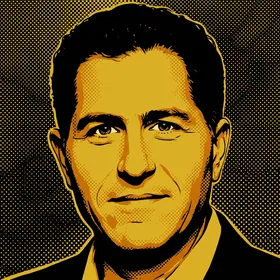
Michael Dell Took His Company Private — Then Won It All Back

Most founders fight to take their company public. Michael Dell did that — then made the radical decision to reverse it, buying back the company he built from his University of Texas dorm room in one of the largest leveraged buyouts in history.
“It’s a fast-paced tale of launching a public company, taking it private, and then taking it public again, all while wrestling with colorful characters such as Carl Icahn.”
— Walter Isaacson on Play Nice But Win by Michael Dell
By 2013, Dell Inc. was under siege. Wall Street was impatient, activist investors were circling, and the short-term demands of public markets were making it nearly impossible to execute the long-term transformation the company needed. Michael Dell, still the founder and CEO, made a decision that defied conventional wisdom: take the whole thing private. The buyout — executed alongside Silver Lake Partners — cost roughly $24 billion and put Dell personally on the hook in ways few founders ever risk. Carl Icahn, one of the most feared activist investors in history, fought the deal aggressively. Dell fought back harder.
What followed was a years-long reinvention that the quarterly earnings cycle would never have allowed. Dell restructured, acquired EMC in a $67 billion deal, and ultimately returned to the public markets in 2018 — stronger, larger, and on his own terms. The entire arc, from dorm room to IPO to privatization to comeback, is the kind of story that sounds like fiction. It wasn’t. It was the result of a founder who never confused short-term pressure with long-term vision, and who was willing to absorb enormous personal and financial risk to protect what he built.
The lesson here isn’t simply about the mechanics of going private. It’s about the courage to reject the rules everyone else plays by when those rules are working against your actual goal. Public markets reward predictability. Transformation rarely is. Dell recognized that you cannot reinvent a company in quarters — and he was willing to pay, fight, and wait to prove it. Most leaders talk about long-term thinking. Dell restructured his entire ownership model around it.
There’s also something worth noting about resilience. As Marc Benioff observed, Dell’s story is fundamentally about a founder who absorbed punches — from competitors, from activists, from the market itself — and kept moving. The privatization wasn’t a retreat. It was a strategic repositioning that required more conviction, not less.
The Memo
-
Reject the timeframe that’s being imposed on you if it conflicts with the transformation you know needs to happen. Short-term pressure is real, but so is the cost of never executing your actual vision.
-
Treat structure as a strategic variable — how your company is owned, governed, and capitalized should serve your goals, not constrain them. Dell changed the structure rather than surrender the strategy.
-
Measure resilience by what you build after the setback, not just whether you survived it. Dell didn’t just reclaim his company — he returned it to public markets bigger than it had ever been.