Ref. 178 · versus · Power reserve 5 min
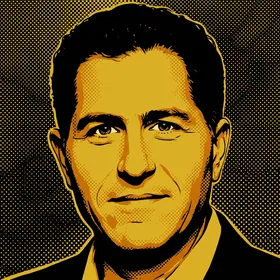
Michael Dell vs. Ray Dalio: Building on Direct Feedback vs. Reading Historical Patterns


Should you build your business strategy by listening closely to the people in front of you right now — or by studying the sweeping forces that have governed human civilization for centuries? Michael Dell and Ray Dalio have both built extraordinary empires, but they arrive at strategic clarity from opposite directions: one from the ground up, one from thirty thousand feet.
Michael Dell: Let the Customer Build the Roadmap
Dell’s entire business model was constructed on a deceptively radical premise — that the customer, not the product team, should be the primary source of strategic intelligence. In the early days of Dell Computer, when rivals were designing machines and pushing them through retail channels, Michael Dell was on the phone with buyers, asking what they actually wanted. That feedback loop didn’t just shape product specs. It shaped the company’s structure, its supply chain philosophy, and its three core rules.
“There is something about having a direct dialogue with the manufacturer that is more satisfying than being forced to buy what a competitor is selling. Even more important, we create a relationship that is based on more than just individual transactions. It’s based on a continuing exchange of information, enabling us to better serve their needs as we learn more about them.”
— Michael Dell, Direct from Dell
This wasn’t a customer service philosophy — it was a competitive weapon. Dell institutionalized real-time feedback at a scale no one in the PC industry had attempted. When customers told Dell that the 1989 Olympic project was the wrong direction, the company pivoted before it became a costly mistake. Dell credits those direct conversations with keeping the company on course during a period when rapid growth could easily have sent it off the rails. The insight is simple but powerful: if you’re selling directly to the people who use your product, you have access to information your competitors simply don’t have.
Ray Dalio: Let History Build the Roadmap
Where Dell looks to the present conversation for signal, Dalio looks to the past — specifically, to the long arc of empires, debt cycles, and institutional collapse. His framework, refined over decades at Bridgewater Associates, holds that the most important forces shaping any organization or economy are the ones that repeat across centuries, not quarters. Individual feedback is noise. The pattern is the signal.
“The same basic sequence of events that leads central governments and central banks to go broke has happened repeatedly throughout history and it isn’t well-understood.”
— Ray Dalio, How Countries Go Broke
Dalio’s argument is that most people — executives, investors, policymakers — make decisions based on what they’ve personally experienced in their own lifetimes, which is a dangerously narrow sample size. The debt-financed booms that feel like prosperity, the internal divisions that feel manageable, the reserve currencies that feel permanent — history shows these are all temporary stages in a predictable cycle. For Dalio, the strategic edge doesn’t come from listening harder to customers in the moment. It comes from understanding where you sit in a much larger arc, and positioning accordingly before the turn arrives.
The Tension
Both approaches are responses to the same underlying problem: uncertainty. Dell’s answer is to shrink the information gap by getting closer to the customer — make the feedback loop so tight that surprises become rare. Dalio’s answer is to zoom out until individual surprises become predictable — because what looks like a surprise at the micro level has almost always happened before at the macro level. Dell’s method thrives in environments where execution speed and product-market fit are the primary drivers of success. If you’re building, selling, and iterating, nothing beats knowing exactly what your buyer wants right now. Dalio’s method thrives in environments where systemic forces — monetary policy, geopolitical shifts, institutional decay — can swamp even the best-run operations. No amount of customer feedback tells you that the reserve currency your business is denominated in is entering a long decline.
The tension becomes most visible when the two frameworks would give contradictory advice. A company drowning in customer requests might read that as a green light to expand aggressively — exactly the move Dalio would caution against if debt levels and macro conditions signal a contraction ahead. Conversely, a company that pulls back because historical cycles suggest caution might miss the immediate opportunity that direct customer data is screaming about. Neither lens is complete on its own. The question is which one you reach for first — and which one you’re currently ignoring.
The Memo
-
Build feedback systems that are structural, not occasional. Dell didn’t just ask customers questions — he designed the entire company around the answers. If your customer intelligence lives in quarterly surveys, you’re not actually listening.
-
Study the cycle you’re in, not just the quarter you’re in. Dalio’s core warning is that decision-makers are perpetually surprised by events that history made entirely predictable. Know where your industry, your economy, and your debt load sit in a longer arc.
-
Use ground-level data to optimize; use historical patterns to survive. Dell’s direct feedback loop is a tool for winning market share. Dalio’s macro framework is a tool for not being wiped out. You need both — one for offense, one for defense.
-
Resist the tyranny of your own timeline. Both billionaires warn, in different ways, against the trap of small sample sizes — Dell by showing how competitor assumptions about customers were simply wrong, Dalio by showing how an entire lifetime of experience can still leave you blind to century-scale forces.