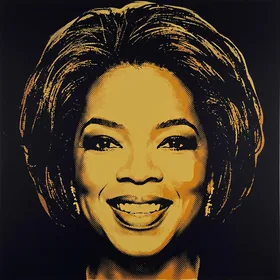
Ref. 170 · Single Quotes · Power reserve 3 min
Oprah Winfrey’s Quiet Operating Principle: Everything You Put Out Comes Back
Most business advice focuses on strategy, leverage, and competitive advantage. Oprah Winfrey built a media empire on something far less fashionable — the belief that output and return are inseparable.
“I make sure to use my life for goodwill. Because I know for sure that what I think, what I say, what I do—everything will be returned to me. And the same is true for you.”
— Oprah Winfrey, What I Know for Sure
This wasn’t an offhand remark. What I Know for Sure grew out of a question Oprah couldn’t answer in the moment — film critic Gene Siskel asked her, live on television in 1998, what she knew for sure. She stumbled. The question haunted her enough that she spent the next sixteen years working toward an answer in a monthly column for O, The Oprah Magazine. The line above appears in the book’s final chapter, on power — not power as dominance, but power as the conscious use of one’s own life. It is, in many ways, the thesis of everything she has built.
Her path to that conviction wasn’t theoretical. She was demoted from a news anchor role in her twenties, shuffled onto a low-rated talk show, and told, implicitly, that she didn’t fit. That demotion became the launchpad for everything. What she carried into that reinvention wasn’t a growth hack or a positioning strategy — it was a fundamental orientation toward how she showed up. The goodwill she extended to guests, audiences, and causes wasn’t separate from her success; it was the engine of it.
The principle cuts against a common assumption in business: that reputation is something you manage, and generosity is something you budget. Oprah’s framework collapses that distinction. What you think shapes what you say. What you say shapes what you do. What you do determines what comes back. The chain is tight, and it starts further upstream than most leaders want to look. That’s what makes it demanding — and what makes it durable. Audiences, employees, and partners are remarkably good at detecting the difference between performed goodwill and the genuine article.
For anyone building something — a company, a brand, a career — the question this principle forces is uncomfortable and clarifying: What are you actually putting out? Not what you intend to put out, but what the people around you are actually receiving. The return, whatever form it takes, tends to be an honest answer.
The Memo
-
Audit your output, not just your outcomes. Before diagnosing why results aren’t where you want them, examine what you’re consistently putting into your interactions, decisions, and communication. The return is usually downstream of something you control.
-
Treat goodwill as infrastructure, not charity. Oprah didn’t extend generosity despite building a business — she extended it as a method of building one. Trust, loyalty, and audience engagement are compounded by consistent good faith over time.
-
Take the long question seriously. Siskel’s question — what do you know for sure? — stopped Oprah cold. Sit with it yourself. The answer, whenever it arrives, tends to reveal the actual principles guiding your decisions, not the ones you think are.