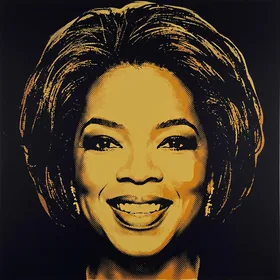
Ref. 86 · Single Quotes · Power reserve 3 min
The Question That Stopped Oprah Cold — And Sparked a Career-Defining Search for Truth

Gene Siskel asked Oprah Winfrey one question, and she had no answer. For a woman who had spent decades asking the questions, that moment of silence changed everything.
“I make sure to use my life for goodwill. Because I know for sure that what I think, what I say, what I do — everything will be returned to me. And the same is true for you.”
— Oprah Winfrey, What I Know for Sure
It was 1998, and Oprah was mid-promotion for Beloved when film critic Gene Siskel wrapped up a live television interview with a question she wasn’t prepared for: “What do you know for sure?” Not about the movie. Not about her career. About life. Oprah — a woman rarely lost for words — stammered. She stalled. She had no answer. That moment of genuine uncertainty lodged itself deep enough that she eventually turned it into a recurring column in O, The Oprah Magazine, and ultimately, into this book. The question became a decades-long practice of self-examination.
By the time she distilled those years of reflection into What I Know for Sure, the answer she arrived at was not complicated — but it was hard-earned. Every thought, word, and action, she concluded, comes back around. This wasn’t mysticism for its own sake. It was a operating principle she had stress-tested across one of the most scrutinized public lives in American history. The principle shaped how she built her media empire, how she treated her audience, and how she made decisions when no one was watching.
What makes this insight worth sitting with isn’t its novelty — variations of it appear across almost every wisdom tradition in history. What makes it powerful is the behavioral demand it places on you. If you genuinely believe that what you put out returns to you, then every interaction becomes consequential. Every shortcut has a price. Every act of generosity is also an investment. Oprah’s version isn’t passive karma — it’s an active accountability system she chose to live inside. That reframe, from abstract belief to daily operating principle, is what separates the people who find the idea comforting from the ones who actually use it.
The practical implication is this: most leaders and builders spend enormous energy managing their external reputation while paying little attention to the quality of what they’re actually putting into the world moment to moment. Oprah’s framework collapses that distinction. Your reputation is the sum of your thoughts, words, and actions — not the curated version, but all of it. Building something durable means the internal standard has to match the external one.
The Memo
-
Treat accountability as a design principle, not a punishment — build the assumption that your actions return to you into how you make decisions daily, not just when the stakes are obvious.
-
Let hard questions sit until you have a real answer — Oprah didn’t fabricate a response for Siskel; she spent years earning one. Intellectual honesty, even when uncomfortable, is where durable insight comes from.
-
Audit the gap between your private standard and your public one — if what you think, say, and do diverges depending on who’s watching, the foundation is weaker than it looks.