Ref. 7 · Single Quotes · Power reserve 3 min
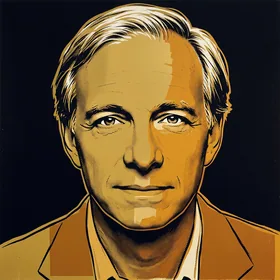
Ray Dalio’s Most Underrated Skill: Knowing What You Don’t Know

The founder of the world’s largest hedge fund doesn’t credit his success to brilliance. He credits it to something far less glamorous — and far more useful.
“Whatever success I’ve had in life has had more to do with my knowing how to deal with my not knowing than anything I know. The most important thing I learned is an approach to life based on principles that helps me find out what’s true and what to do about it.”
— Ray Dalio, Principles: Life and Work
Dalio opens his book with a disarming admission: “I’m a ‘dumb shit’ who doesn’t know much relative to what I need to know.” This from a man who built Bridgewater Associates into a $150 billion asset management firm. It’s not false modesty — it’s the foundation of his entire operating system. Early in his career, Dalio made a catastrophic bet that the economy would collapse. He was publicly wrong, nearly bankrupt, and forced to rebuild from scratch. That failure didn’t just humble him. It rewired how he approached every decision that followed. He stopped trusting what he “knew” and started building a systematic process for stress-testing his beliefs against reality.
Most people treat uncertainty as a threat. Dalio treats it as the default state — and builds around it. His approach is deceptively simple: because the same kinds of situations tend to repeat, you can develop principles — decision-making rules forged from past experience — that help you navigate each recurring pattern. You don’t need to be the smartest person in the room. You need a system for converting mistakes and blind spots into reliable frameworks. As Dalio puts it: “Where you get these principles from doesn’t matter as much as having them and using them consistently — and that you never stop refining and improving them.”
This is a profound reframe. The competitive advantage isn’t knowledge — it’s the process you use when your knowledge runs out. In a world that rewards overconfidence, Dalio’s edge came from institutionalizing doubt. He built a culture at Bridgewater where anyone could challenge anyone’s thinking, where radical transparency forced ideas to survive scrutiny rather than hierarchy. The result wasn’t chaos. It was a machine that corrected its own errors faster than competitors could.
The practical application extends well beyond hedge funds. Whether you’re running a startup, managing a team, or navigating a career pivot, the moments that define you are rarely the ones where you have perfect information. They’re the ones where you don’t — and you need a reliable process anyway.
The Memo
-
Build a personal operating system. Write down the principles that guide your decisions. When you face a recurring situation, don’t start from zero — reference and refine what you’ve already learned.
-
Treat ignorance as an asset, not a liability. Acknowledging what you don’t know opens the door to better questions, better advisors, and better outcomes. Overconfidence is the more expensive mistake.
-
Stress-test relentlessly. Seek out people who disagree with you and create environments where your ideas have to survive challenge. The goal isn’t to be right the first time — it’s to get right faster.