Ref. 6 · Single Quotes · Power reserve 2 min
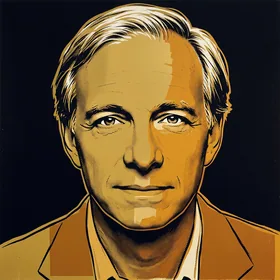
Ray Dalio’s Most Underrated Confession — And Why It’s the Key to Everything He Built

The founder of the world’s largest hedge fund opens his 600-page manifesto not with a victory lap, but with a confession most billionaires would never make.
“Whatever success I’ve had in life has had more to do with my knowing how to deal with my not knowing than anything I know.”
— Ray Dalio, Principles: Life and Work
Ray Dalio built Bridgewater Associates into a $150 billion firm. He’s been called the “Steve Jobs of investing.” And yet, on the very first page of Principles, he calls himself a “dumb shit who doesn’t know much relative to what I need to know.” This isn’t false modesty — it’s the operating system that made everything else possible.
Dalio’s entire framework rests on a deceptively simple chain: because he accepted what he didn’t know, he developed principles to help him figure out what was true and what to do about it. Each mistake became a puzzle. Each puzzle, once solved, yielded a “gem” — a principle he could reuse the next time reality threw a similar problem his way. Over decades, those gems compounded. Not his confidence. Not his IQ. His system for handling ignorance.
This flips the standard success narrative on its head. We’re conditioned to believe that the people at the top got there because they knew more, saw further, or were simply smarter. Dalio argues the opposite: the edge comes from building a reliable process for the moments when you don’t know. That’s what principles are — pre-made decisions for recurring situations, stress-tested over time so you’re not improvising under pressure. As he puts it: “Where you get these principles from doesn’t matter as much as having them and using them consistently — and that you never stop refining and improving them.”
The practical implication is significant. Most people treat uncertainty as a threat. They freeze, bluff, or defer to whoever sounds most confident. Dalio treats uncertainty as the default state and builds infrastructure around it. He reconciles emotion with logic before acting. He embraces reality instead of wishing it were different. And crucially, he writes it all down — creating a living document that evolves as he does. The result isn’t certainty. It’s something better: a repeatable method for making good decisions in the absence of certainty.
The Memo
-
Audit your ignorance, not just your knowledge. Make a habit of identifying what you don’t know in any important situation. The gaps are where the real risk — and opportunity — lives.
-
Build a personal decision library. Every time you solve a hard problem, extract the principle behind the solution and write it down. Over time, you’ll stop solving the same problems from scratch.
-
Stop waiting to feel certain before you act. Design a process you trust — a set of tested principles — and follow it. The goal isn’t to eliminate uncertainty; it’s to make good decisions despite it.