Ref. 44 · Single Quotes · Power reserve 3 min
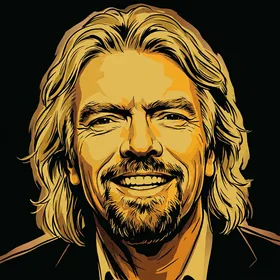
Richard Branson’s Case Against Overthinking — And the One Move That Beats It
Most people don’t fail because they lack talent or resources. They fail because they never start. Richard Branson learned this lesson early, and it became the operating principle behind everything from Virgin Records to Virgin Atlantic.
“The best lesson I learned was to just do it. It doesn’t matter what it is, or how hard it might seem, as the ancient Greek, Plato, said, ‘The beginning is the most important part of any work.’ A journey of a thousand miles starts with that first step. If you look ahead to the end, and all the weary miles between, with all the dangers you might face, you might never take that first step. And whatever it is you want to achieve in life, if you don’t make the effort, you won’t reach your goal. So take that first step. There will be many challenges. You might get knocked back — but if you don’t try, you’ll never know what you’re capable of.”
— Richard Branson, Screw It, Let’s Do It
Branson writes this in the context of reflecting on how much has changed since he was young. Careers used to be more predictable — you often followed your father’s path, and mothers stayed home. Today, he argues, nothing is certain. Life demands that people make active choices if they want to get anywhere. For Branson, the antidote to uncertainty wasn’t a better plan or more information. It was movement. He taught himself to memorize things by heart because he struggled academically, and that discipline of just getting on with it — regardless of the obstacles — became what he calls his best tool in business.
What makes this insight worth sitting with is its honesty about the real enemy. Branson isn’t dismissing the difficulty of building something. He’s pointing out that the mental simulation of difficulty — staring at the full journey and all its dangers — is what stops most people cold. The person who zooms out to see every possible failure between here and the finish line will almost certainly talk themselves out of starting. The person who focuses only on the next step keeps moving. This is the same principle that let Branson launch an airline with no aviation experience, or enter the mobile phone market against entrenched giants. He didn’t need to see the whole staircase. He needed to see the first step and have enough nerve to take it.
There’s a practical corollary here: action produces information that planning cannot. You don’t learn whether a business idea works by modeling it endlessly in a spreadsheet. You learn by putting something into the market and watching what happens. Branson’s entire career is a testament to this. Virgin has entered dozens of industries, failed in several, and succeeded spectacularly in others — but every outcome was the result of someone deciding to take the first step rather than waiting for certainty that would never arrive.
The Memo
-
Shrink the frame. Stop visualizing the entire journey and its thousand potential problems. Focus exclusively on the very next action you can take — today, this hour. That’s the only step that matters right now.
-
Treat action as research. No amount of planning replaces the data you get from actually doing something. Launch small, learn fast, and adjust. The path reveals itself to people who are already walking.
-
Accept the knockbacks upfront. Branson doesn’t promise a smooth road — he promises that the alternative is worse. Not trying guarantees you’ll never discover what you’re capable of. Getting knocked back at least puts you in the game.