Ref. 186 · Single Quotes · Power reserve 2 min
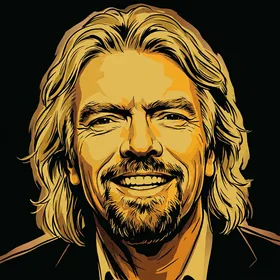
Richard Branson’s One-Word Rule for Building a Multi-Billion Dollar Empire

Most business philosophies tell you what to do. Branson’s is defined by what he refuses to say.
“I will never say, ‘I can’t do this because I don’t know how to.’ I will give it a go. I won’t let silly rules stop me. I will find a legal way around them.”
— Richard Branson, Screw It, Let’s Do It
Branson’s staff nicknamed him “Dr Yes” — not as a joke, but as a statement of fact. At Virgin, the default answer to any bold idea was yes, and the burden of proof fell on the reasons not to act, not on the reasons to try. This wasn’t recklessness dressed up as philosophy. It was a deliberate operating principle that Branson traced back to his earliest days running Student magazine as a teenager — long before Virgin was a brand, let alone a global empire.
The philosophy was tested most dramatically when Virgin Atlantic was conceived. There were no exhaustive market studies, no thick folders of financial projections. By Branson’s own admission, the airline was launched on gut feeling and contrarian intuition. He later reflected that if Virgin had been a conventional public company at the time — beholden to shareholder value and sign-off committees — the airline would never have made it off the drawing board. The same went for Tubular Bells, the entirely instrumental debut record that launched Virgin Records. Both bets defied conventional logic. Both paid off enormously.
What Branson is describing isn’t the absence of preparation — he’s explicit elsewhere that you should prepare well. What he’s rejecting is the habit of using inexperience as a veto. Most people treat “I don’t know how” as a stop sign. Branson treats it as a starting point. The gap between where you are and where you need to be isn’t a reason to abandon a goal; it’s just a problem to be routed around. This reframe is subtle but powerful: it moves you from a fixed mindset disguised as pragmatism into genuine creative problem-solving.
The practical danger Branson acknowledges is real — snap decisions have led Virgin into some costly misadventures, Virgin Cola among them. But the pattern of his career suggests the bigger risk runs the other way. Waiting for perfect knowledge, perfect conditions, and perfect consensus is its own kind of failure. It just happens slowly enough that most people never notice it happening.
The Memo
-
Ban the word “can’t” as a first response. When you catch yourself saying it, ask instead: what would I need to know or find to make this possible?
-
Shift the burden of proof. Instead of justifying why you should try something, demand a real reason why you shouldn’t — not a vague sense of unreadiness.
-
Use inexperience as a search query, not a verdict. “I don’t know how” should trigger research, outreach, and iteration — not retreat.