Ref. 130 · Single Quotes · Power reserve 2 min
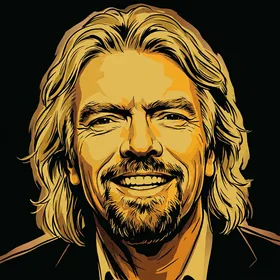
Richard Branson’s One-Word Rule for Building a Billion-Dollar Empire

Most business empires are built on spreadsheets, feasibility studies, and carefully worded mission statements. Richard Branson built his on the rejection of a single word.
“I don’t believe that that little word ‘can’t’ should stop you. If you don’t have the right experience to reach your goal, look for another way in.”
— Richard Branson, Screw It, Let’s Do It
Branson didn’t arrive at this philosophy in a boardroom. It was forged over decades of doing things he had no formal qualification to do — launching a magazine as a teenager, starting a record label with no music industry background, then announcing he wanted to build an airline. His staff at Virgin gave him a nickname: Dr Yes. Not because he was reckless, but because his default setting was to find reasons to act rather than reasons to abstain. Where most executives build elaborate risk frameworks to justify inaction, Branson was already on the phone making it happen.
The insight that makes this more than a motivational slogan is what follows it. Branson doesn’t say ignore your gaps — he says route around them. Virgin Atlantic nearly didn’t exist because conventional logic said a scrappy record company had no business in commercial aviation. But Branson trusted his gut, played the odds, and won. The same contrarian intuition gave the world Tubular Bells — a record no one else would touch. His point is quietly radical: the absence of experience is not a stop sign. It’s a navigation problem.
The trap most people fall into is treating “can’t” as a statement of fact rather than a statement of current position. Branson treats it as the latter — a temporary condition that calls for a creative workaround, not a full retreat. In practice, this means the question shifts from “Can I do this?” to “How do I get into a position where I can?” That reframe alone changes what becomes possible. It also explains why Virgin, as a public company with shareholders demanding conventional discipline, quietly began to suffocate — the genie, as Branson put it, had been forced into a bottle.
The Memo
-
Ban “can’t” as a final answer. Treat it as a prompt to find an alternative route, not a reason to stop moving.
-
Separate experience from capability. A lack of credentials is a logistics problem — solve it by finding another way in, whether through people, partnerships, or sheer persistence.
-
Protect your default setting. Branson’s edge wasn’t genius — it was a bias toward action. Build environments, teams, and habits that keep that bias alive rather than slowly bureaucratizing it out of existence.