Ref. 39 · versus · Power reserve 6 min
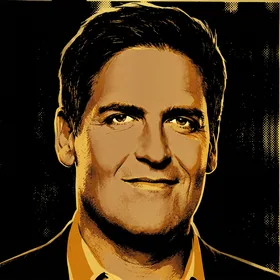
Ted Turner vs. Mark Cuban: Desperate Urgency vs. Relentless Consistency


When the pressure is on and the stakes are existential, how should a business leader respond? Do you erupt with alarm, rally your allies, and demand immediate action — or do you stay locked in, trusting that your daily competitive discipline will carry you through any crisis? Ted Turner and Mark Cuban both built media empires, but their approaches to the intensity of business could not be more different. One operates in explosive bursts of urgency. The other treats the whole game as a permanent state of war.
Ted Turner: Sound the Alarm
“You’ve got to do something! You’ve got to do something!”
— Ted Turner, Call Me Ted
That quote comes from a phone call Ted Turner made to John Malone at 5:30 in the morning — having forgotten the time zone difference from Atlanta to Denver. Turner was in crisis. After acquiring MGM and loading his company with debt, Kirk Kerkorian’s financing structure was threatening to swallow CNN whole. Turner’s fear was visceral and specific: CNN would become “KNN — the Kerkorian News Network.” He wasn’t calling with a plan. He was calling with a fire alarm.
This was Turner’s signature style. He didn’t quietly work through problems on a spreadsheet. He treated business threats like emergencies that demanded immediate, all-hands responses. When CNN’s survival was at stake, Turner picked up the phone before dawn and screamed for help. And it worked — Malone helped restructure the debt and kept Kerkorian at bay. Turner’s career is a series of these moments: launching CNN when the entire broadcasting establishment said 24-hour news was insane, bidding for CBS in a hostile takeover attempt, merging with Time Warner when the landscape shifted. Each move was driven by a sense that if you don’t act right now, the window closes forever. Turner’s intensity wasn’t performative — it was how he processed threat. Urgency was his operating system. He believed the world rewarded those who moved first and moved loudly, even if the plan wasn’t fully formed when they started moving.
The downside of this approach showed up too. The MGM deal that prompted that panicked call to Malone was itself a product of Turner’s impulsive, move-fast instincts. He had overpaid, taken on crippling debt, and nearly lost everything. But even in that self-inflicted crisis, Turner’s response was the same: escalate the urgency, demand action, and trust that sheer force of will would find a way through.
Mark Cuban: Never Stop Competing
“The sport of business is the ultimate competition. It’s 7 x 24 x 365 x forever.”
— Mark Cuban, How to Win at the Sport of Business
Cuban doesn’t do panic. Not because he’s calm by temperament — anyone who’s watched him courtside at a Mavericks game knows better — but because his philosophy eliminates the concept of a crisis as a distinct event. If you’re already competing at maximum intensity every single day, there’s no gear left to shift into when things go wrong. The baseline is the emergency setting.
“Relaxing is for the other guy,” Cuban writes. He describes sitting in front of the TV but not really watching it — instead thinking about things he can use in his business while the screen flickers in the background. For Cuban, the competitive advantage isn’t found in dramatic moments of crisis response. It’s found in the thousands of hours of preparation, learning, and relentless effort that make crisis less likely in the first place. He frames business not as a series of games with defined starts and finishes, but as an infinite contest with no timeouts, no offseason, and no referee. The implication is clear: if you’re treating every day like a championship game, you don’t need a 5:30 AM wake-up call to tell you to act.
Cuban’s path to billions followed this logic. He sold MicroSolutions by grinding out customer relationships and learning everything he could about technology. He built Broadcast.com not through one bold bet but through sustained, obsessive effort to stay ahead of competitors who were working hard but — in Cuban’s view — not hard enough. When Yahoo acquired Broadcast.com for $5.7 billion, it wasn’t the product of a single dramatic move. It was the culmination of years of treating every day like a sudden-death playoff.
The Tension
Turner and Cuban both succeeded spectacularly, but they model two very different relationships with intensity. Turner’s approach is reactive urgency — the ability to recognize a critical moment, sound the alarm, and mobilize resources with extraordinary speed. It’s the leadership style of a wartime general who thrives in chaos and can inspire others to act when the building is on fire. The risk is that you create some of those fires yourself, as Turner did with the MGM acquisition.
Cuban’s approach is proactive endurance — the belief that sustained, daily competitive effort is more powerful than any single moment of crisis. It’s the leadership style of an athlete who trains so relentlessly that game day feels like just another workout. The risk is different: if you treat everything as equally urgent, you might miss the moments that truly require a different level of response. Not every day is actually a championship game, and the person who acts like it is might burn out — or burn out everyone around them.
The truth is that most successful businesses need both modes. There are seasons that reward Cuban’s daily grind — the long stretches where competitive advantage is built through preparation, learning, and consistency. And there are inflection points that reward Turner’s explosive urgency — the moments when a phone call at dawn, a bold acquisition, or a willingness to look slightly unhinged is exactly what saves the company. The question isn’t which approach is right. It’s whether you can recognize which moment you’re in.
The Memo
-
Build your baseline high. Cuban’s “7 x 24 x 365 x forever” mindset means that when a real crisis hits, you’re not starting from zero. Daily competitive effort is the best insurance policy against existential threats.
-
Know when to break the glass. Turner’s willingness to call John Malone at 5:30 AM saved CNN. Some moments demand escalation, not routine. Don’t let a commitment to steady consistency blind you to the moments that require alarm bells.
-
Separate self-inflicted crises from real ones. Turner’s MGM deal was urgency creating its own emergency. Before you sound the alarm, ask whether the fire was already burning or whether you lit it yourself — and adjust accordingly.
-
Match your intensity to the moment. Treat every day like a competition, but reserve your most dramatic responses for the handful of moments that actually threaten to change the game. Permanent panic isn’t a strategy — it’s a liability.