Ref. 206 · Single Quotes · Power reserve 2 min
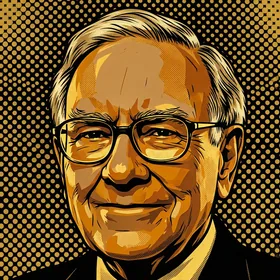
Warren Buffett’s Worst Year: How He Faced Failure With Radical Honesty
In 1999, Warren Buffett did something most executives quietly dread: he opened his annual letter to shareholders by announcing, without qualification, that he had failed.
“We had the worst absolute performance of my tenure and, compared to the S&P, the worst relative performance as well… Even Inspector Clouseau could find last year’s results.”
— Warren Buffett, Berkshire Hathaway Shareholder Letter 1999
The context could hardly have been more humbling. While Berkshire’s net worth grew a mere 0.5% per share, Yahoo! had quadrupled in value and was sitting at a $115 billion market cap. The tech boom was minting new fortunes overnight, and Buffett — who had refused to chase internet stocks he didn’t understand — was being publicly pilloried for it. Barron’s put him on its cover with the headline “Warren, What’s Wrong?” He had slipped to the fourth-richest person in the world. Technophiles declared his approach obsolete. The crowd had decided the old rules no longer applied.
Buffett’s response wasn’t defensiveness or spin. He opened the letter with the Inspector Clouseau line — a self-deprecating joke that acknowledged the obvious before anyone else could. He didn’t bury the underperformance in footnotes or dress it up in strategic language. He named it, owned it, and moved on to explain his reasoning with the same calm conviction he’d always carried. This wasn’t humility as performance. It was humility as strategy.
What makes this moment instructive isn’t that Buffett was wrong in 1999 — history would vindicate his skepticism of dot-com valuations within two years. What matters is how he handled being perceived as wrong at scale. By meeting criticism head-on with self-aware candor, he did something counterintuitive: he deepened trust. Readers and shareholders who watched him admit failure so directly were far more inclined to believe him when he explained why Berkshire’s principles remained sound. Credibility isn’t built by appearing infallible. It’s built by being honest when the numbers are ugly — and holding your position anyway, if your reasoning still holds.
The Memo
-
Name your failures before others do. Buffett opened with his worst result, not his best excuse. Getting ahead of bad news signals confidence, not weakness — and it earns the trust that lets your good news land harder.
-
Distinguish between a bad year and a bad principle. Underperforming in a bubble is not the same as being wrong. Know the difference between a temporarily painful position and a fundamentally flawed one — and have the conviction to hold when the crowd is loudest.
-
Use humor to disarm, not to deflect. The Inspector Clouseau line acknowledged reality without wallowing in it. A well-placed moment of self-deprecation shows self-awareness and moves the conversation forward instead of stalling in defensiveness.