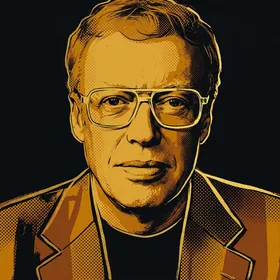
Ref. 183 · Founder Stories · Power reserve 3 min
Why Phil Knight Says He Feels Sorry for People Who Have a Plan
Most business schools will tell you to start with a ten-year vision. Phil Knight built one of the most recognizable brands in history without one — and he thinks that’s exactly the point.
“I feel sorry for the people who know exactly what they’re going to do from the time they’re sophomores in high school.”
— Phil Knight, Shoe Dog: A Memoir by the Creator of Nike
Knight didn’t set out to build Nike. He set out to be a professional athlete. When his ability didn’t match his ambition, he didn’t pivot to a spreadsheet and a five-year plan — he simply looked for any way to stay close to the thing he loved. That meant running track at Oregon under coach Bill Bowerman, a obsessive tinkerer who would later become his cofounder. Nike wasn’t a vision. It was a next step. When asked in 2016 about the long-term strategy behind the company’s founding, Knight was candid: there wasn’t one. He wasn’t much for long-term planning, even as a college student. He was just following the thread.
That thread led him to a Stanford business school paper about importing Japanese running shoes, then to a handshake deal with Onitsuka Tiger in Japan, then to a folding table at track meets selling shoes out of the trunk of a car. Each move was short-term, practical, and informed by genuine passion — not a grand design. The empire came later. The obsession came first.
There’s a quiet rebellion in Knight’s words. The conventional wisdom is that ambiguity is the enemy — that the people who succeed are the ones who decided early, committed fully, and executed relentlessly against a fixed target. Knight’s life argues the opposite. Rigid early certainty can close off the lateral moves, the unexpected mentors, the odd opportunities that turn out to matter most. Knowing too soon what you want to do can blind you to what you’re actually capable of becoming.
What Knight practiced — and what research on high achievers increasingly confirms — is short-term planning with long-term curiosity. He didn’t know where he was going. He knew what he cared about. That’s a different kind of compass, and for many of the people who build remarkable things, it turns out to be the more reliable one.
The Memo
-
Follow the obsession, not the plan. Knight didn’t start with a destination — he started with a sport he loved and kept finding ways to stay inside it. Passion is a better navigational tool than a roadmap drawn before you know the terrain.
-
Let early failures redirect you, not define you. Knight’s original goal was to compete professionally. When that door closed, he walked through a different one. The willingness to adjust without abandoning what mattered made everything else possible.
-
Make the next right move, not the perfect long-term move. Nike was built on a series of short-term decisions — each one logical given the moment, none of them part of a master plan. Clarity about now often matters more than certainty about later.