Ref. 106 · Single Quotes · Power reserve 3 min
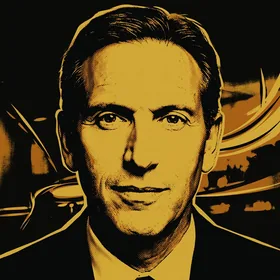
Howard Schultz on Why Commitment Comes Before the Map

Most people wait for the right moment. Schultz built Starbucks by understanding why that wait is lethal.
“There are moments in our lives when we summon the courage to make choices that go against reason, against common sense and the wise counsel of people we trust. But we lean forward nonetheless because, despite all risks and rational argument, we believe that the path we are choosing is the right and best thing to do. We refuse to be bystanders, even if we do not know exactly where our actions will lead.”
— Howard Schultz, Onward, ch. A Beverage of Truth
Schultz didn’t write this in the abstract. He wrote it about one of the most consequential decisions of his career — stepping back into Starbucks as CEO in 2008, at the exact moment the company was in freefall. Sales were collapsing, the stock had cratered, and the brand had lost its identity in a chase for growth. He could have stayed on the sidelines and let someone else take the blame. Instead, he committed fully, and this is how he accounts for it: not as confidence that it would work, but as a refusal to stand and watch.
What Schultz lived out at Starbucks is that commitment is not merely a mindset. It is a mechanism. Half-decisions produce half-results not because of bad luck, but because partial commitment signals to everyone around you, and to yourself, that retreat is still an option. The moment that option closes, something shifts: decisions that once seemed paralyzing become obvious. Schultz closed hundreds of underperforming stores, retrained every barista in America, and eliminated products that had diluted the brand — moves that required an almost reckless certainty. He wasn’t certain things would work. He was certain he would not stop.
The practical implication here is not that you should be reckless or ignore contrary evidence. It’s that the half-committed state — where you’re technically pursuing something but haven’t burned the boats — is its own kind of trap. It costs energy, bleeds focus, and signals ambivalence to every person watching you lead. The leader who commits fully changes the math for everyone in the room. That’s not mysticism. That’s leverage.
The Memo
-
Decide once, fully. Identify the decision you’ve been hovering over and make a clean, documented commitment — then tell someone who will hold you to it.
-
Treat hesitancy as a cost, not a virtue. Every day spent in a half-committed state is burning resources — attention, credibility, momentum — without producing returns.
-
Begin before you’re ready. Schultz’s account is explicit that he moved against reason and against the counsel of people he trusted. The starting conditions will never be perfect; committing is what starts improving them.
Correction, 30 September 2026: an earlier version ended this quote with a sentence that is not in Onward. “A whole stream of events issues from the decision…” is W. H. Murray’s, from The Scottish Himalayan Expedition (often misattributed to Goethe). It has been removed, with the prose that echoed it.