Ref. 22 · versus · Power reserve 5 min
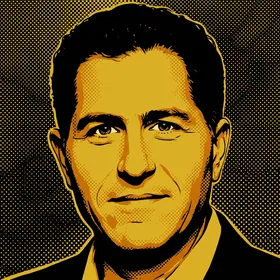
Richard Branson vs. Michael Dell: Gut Instinct vs. Data-Driven Decisions


How do you make the big calls? Two billionaires who built empires from scratch offer radically different answers. Richard Branson trusts his instincts, leaps before the net appears, and figures it out on the way down. Michael Dell gathers data, listens to customers, and moves fast — but only once the information points the way. Both approaches built multi-billion-dollar companies. The question isn’t which one is right. It’s which one is right for the moment you’re in.
Richard Branson: Leap First, Learn on the Way Down
“I have never followed the rules at every step… I am still learning and hope I never stop.”
— Richard Branson, Screw It, Let’s Do It
Branson’s career reads like a series of bets that no reasonable person would have taken. He started a student magazine at sixteen, launched a mail-order record business from a church crypt, and then — with no aviation experience whatsoever — decided to start an airline to compete with British Airways. His colleagues thought it was lunacy. He did it anyway.
This pattern repeats across more than two hundred companies in over thirty countries. Branson is, by his own admission, the only person in the world to have built eight billion-dollar companies from scratch in eight different sectors. That kind of diversification doesn’t come from careful market analysis. It comes from a disposition — a willingness to say “screw it, let’s do it” and trust that the problems can be solved after the commitment is made. Branson has never read a book on leadership. He dropped out of school at sixteen. He suffers from dyslexia. And yet he’s built an empire precisely because he refused to let conventional wisdom set the boundaries. His philosophy is that you’ll never have to think outside the box if you refuse to let anyone build one around you in the first place. The data might not support the leap. Branson leaps anyway, because he believes that conviction, energy, and adaptability are more valuable than certainty.
Michael Dell: Decide Fast, but Decide with Data
“I believe it’s better to be first at the risk of being wrong than it is to be 100 percent perfect two years too late. You can’t possibly make the quickest or best decisions without data. Information is the key to any competitive advantage.”
— Michael Dell, Direct from Dell
Dell’s origin story has its own audacity — he drove away from his parents’ house as a college freshman with three personal computers in the backseat of a BMW and turned that into an $18 billion company. But the way he built that company could not be more different from Branson’s approach. Dell Computer was founded on a deceptively simple premise: sell directly to end users, cut out the middleman, and use the information flowing back from customers to drive every decision.
Dell didn’t just collect data — he organized his entire company around it. Because they had all the information at their fingertips, they could gather the right people in one room, make a decision, and move forward fast. Speed mattered enormously, but it was speed informed by evidence. Dell learned this the hard way. Early on, customers steered the company away from what could have been disastrous moves, like the ill-fated Olympic project in 1989. One of the most surprising discoveries? Customers valued simply being asked. The direct dialogue — the continuous exchange of information between manufacturer and buyer — became Dell’s greatest competitive advantage. It wasn’t just about individual transactions. It was a relationship built on data, feedback, and iteration. Dell didn’t wander into new sectors on a hunch. He roamed the hallways, gathered anecdotal feedback, listened to spontaneous remarks, and then let all of that shape strategy.
The Tension
Here’s what makes this contrast genuinely interesting: both men value speed. Branson moves fast because he trusts his gut and knows that overthinking kills momentum. Dell moves fast because he’s built systems that deliver the right information to the right people at the right time, eliminating the delay between insight and action. They arrive at similar velocities through completely opposite methods.
The deeper question is about the nature of the business you’re building. Branson’s instinct-first approach works brilliantly in brand-driven, experience-oriented markets where the founder’s personality and vision are the product. When you’re launching an airline or a record label or a space tourism company, there’s no dataset that tells you whether the world is ready. You have to feel it. Dell’s data-first approach, on the other hand, was built for a market where efficiency, cost, and customer specifications are everything. In commodity hardware, the person who listens most carefully to what customers actually want — and delivers it faster and cheaper — wins. Neither approach is universally superior. Branson’s gut would be reckless without his relentless adaptability. Dell’s data would be paralyzing without his bias toward action. The genius in each case is knowing which input to trust most given the terrain.
The Memo
-
Match your decision-making style to the information landscape. In uncharted territory where no data exists, conviction and speed matter more than analysis. In competitive, well-defined markets, the person with better information wins. Know which world you’re operating in.
-
Build feedback loops before you need them. Dell’s greatest asset wasn’t his products — it was the continuous dialogue with customers that shaped those products. Even if you lean toward instinct, create channels that force reality to talk back to you.
-
Bias toward action in both cases. Branson and Dell agree on one thing: hesitation is more dangerous than a wrong decision. Whether you’re leaping on a hunch or acting on data, the cost of waiting almost always exceeds the cost of being imperfect.
-
Refuse to let the box define you. Branson never let convention limit where Virgin could go. Dell never let the industry’s traditional distribution model limit how he could sell. The instinct-vs-data debate is secondary to the more fundamental question: are you willing to challenge the assumptions everyone else accepts?