Ref. 96 · versus · Power reserve 4 min
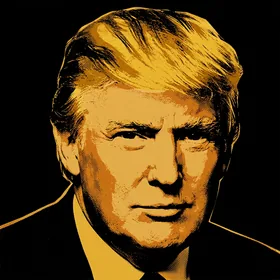
Trump vs. Knight: Born Instincts vs. Earned Obsession


What separates entrepreneurs who win from those who don’t? Donald Trump says you’re either born with it or you aren’t. Phil Knight built Nike by proving that obsession, not raw talent, is the real engine. Same destination — building something massive — radically different maps.
Donald Trump: Deal-Making Is in the Genes
“More than anything else, I think deal-making is an ability you’re born with. It’s in the genes. I don’t say that egotistically. It’s not about being brilliant. It does take a certain intelligence, but mostly it’s about instincts. You can take the smartest kid at Wharton, the one who gets straight A’s and has a 170 IQ, and if he doesn’t have the instincts, he’ll never be a successful entrepreneur.”
— Donald Trump, The Art of the Deal
Trump’s philosophy is built on the premise that the entrepreneurial edge is innate. In his telling, formal credentials are table stakes at best and a distraction at worst. What separates the deal-maker from the also-ran isn’t education or effort — it’s an almost primal sense of when to push, when to pivot, and when to walk away. He describes his own method as simple: aim high, then push relentlessly until you get what you want. The instinct tells you what to aim at. The grind just gets you there.
This framework shaped how Trump operated across real estate, casinos, and branding. He wasn’t iterating toward a vision through trial and error — he was trusting a gut-level read on leverage, timing, and people. His eleven deal-making guidelines, laid out in The Art of the Deal, read less like a learned curriculum and more like a codification of reflexes he already had. To Trump, you can sharpen instincts, but you cannot manufacture them. The courage to act on them is nearly as rare as the instincts themselves.
Phil Knight: Obsession as the Only Prerequisite
“Nikes were making me. If I saw an athlete choose another shoe, if I saw anyone choose another shoe, it wasn’t just a rejection of the brand alone, but of me.”
— Phil Knight, Shoe Dog: A Memoir by the Creator of Nike
Knight didn’t walk into Nike with a gift for shoes. He walked in with a fixation — on running, on Japan, on the idea that American athletes deserved better footwear than they were getting. The early years of Nike were defined not by instinct but by relentless, sometimes reckless devotion to the product and the mission. Knight took notes on flights, studied factories like a student, hired people who felt the same gut-punch when a rival brand won a customer. He didn’t just want employees — he wanted fellow obsessives, what the industry called “shoe dogs.”
That emotional ownership extended to every dimension of the business. When Nike’s early shoes literally disintegrated on Notre Dame’s quarterback, the response wasn’t a shrug — it was a sprint to find better factories, better materials, better processes. When inventor Rudy came in pitching pressurized air bags inside soles, Knight didn’t dismiss the eccentric pitch. He leaned in, because obsession keeps you open to things that instinct alone might filter out. Nike’s story is ultimately one of compounding commitment: each setback absorbed, each lesson applied, each near-bankruptcy survived through sheer refusal to quit rather than through any single flash of born brilliance.
The Tension
Trump and Knight are not actually arguing about different businesses — they’re arguing about different theories of the self. Trump believes the entrepreneurial identity is fixed, revealed under pressure rather than constructed through experience. Knight believes it is forged, that the founder you become is a product of what you’re willing to endure and how completely you give yourself over to the thing you’re building. Both men succeeded spectacularly. That’s the uncomfortable part.
The likely truth is that context determines which model applies. In deal-heavy, relationship-driven industries — real estate, finance, negotiation — pattern recognition and social instinct do seem to carry disproportionate weight. In product-driven, craft-intensive industries — footwear, manufacturing, consumer goods — obsessive iteration and domain knowledge accumulate into an advantage that no amount of raw instinct can shortcut. The more useful question isn’t “are you born with it?” but “what does your particular arena actually reward?”
The Memo
-
Audit what your industry actually rewards. If you compete on deals and relationships, trust and develop your instincts aggressively. If you compete on product and craft, invest in obsessive depth — instinct won’t close that gap alone.
-
Hire for the burn, not just the resume. Knight wanted people who felt a rival shoe sale as a personal rejection. Whatever your equivalent of that is, find people who already feel it — you can’t install that after the fact.
-
Aim high, then stay open. Trump’s push-hard-toward-a-target approach works — but Knight’s Nike Air moment shows that breakthroughs often arrive from unexpected directions. Set bold targets, but don’t let instinct become a filter that blocks the eccentric, counterintuitive idea that changes everything.
-
Let the work define you, not the other way around. Knight’s line — “Nikes were making me” — captures something Trump’s instinct-first model can miss. Deep engagement with what you’re building changes you into someone better equipped to build it. Identity and craft can be a two-way street.