Ref. 228 · Single Quotes · Power reserve 2 min
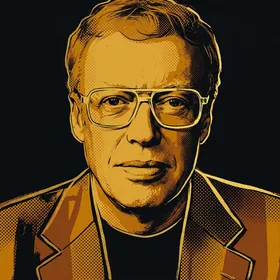
Why Phil Knight Says He Feels Sorry for People Who Always Knew What They Wanted to Be
Most origin stories are written backwards — the endpoint chosen first, the journey reverse-engineered to make it look inevitable. Phil Knight’s story resists that tidiness entirely.
“I feel sorry for the people who know exactly what they’re going to do from the time they’re sophomores in high school.”
— Phil Knight, Shoe Dog: A Memoir by the Creator of Nike
When asked in 2016 about the long-term vision behind Nike, Knight gave an answer that surprised people: there wasn’t one. What he had actually wanted was to be a professional athlete. He ran track, competed seriously, and built his identity around sport. But he wasn’t good enough to go pro. So he didn’t pivot to a grand plan B — he simply tried to stay close to the thing he loved. That meant running under coach Bill Bowerman at the University of Oregon, a restless tinkerer who kept pulling apart shoes and rebuilding them. That relationship became the seed of Nike. Not a vision. A proximity.
Knight’s memoir reinforces this. He wasn’t much for long-term planning, even as a student. The company that would eventually put a swoosh on the world grew out of a series of short, improvised steps — importing Japanese running shoes out of a duffel bag, selling them from the back of a car at track meets, and figuring out the next move only when the current one ran out of road. The grand narrative of Nike came later, assembled in retrospect by journalists and business school case studies. At the time, there was only the next problem to solve.
This matters because the pressure to have a fixed destination — a five-year plan, a LinkedIn headline that maps your entire arc — is both pervasive and quietly damaging. It mistakes certainty for ambition. Knight’s insight, earned through building one of the most recognizable brands on the planet, is that rigid long-term vision can actually close off the best paths. The person who knows exactly what they’ll become at sixteen stops noticing the detours that might lead somewhere better. Short-term planning, practiced honestly and with full commitment to each step, is not a lack of ambition. It’s how most meaningful things actually get built.
The Memo
-
Stop treating uncertainty as a flaw to fix. Not knowing your five-year destination isn’t a gap in your strategy — it’s often the condition that keeps you open to the right opportunities.
-
Stay close to what you love, even when the original dream doesn’t work out. Knight couldn’t be an athlete, so he stayed in sport. The proximity itself became the advantage.
-
Commit fully to the next step without needing to see the whole staircase. Short-term planning executed with intensity beats a long-term vision that paralyzes or blinds you to what’s actually in front of you.