Ref. 253 · Single Quotes · Power reserve 2 min
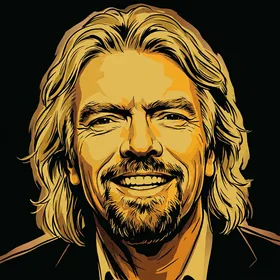
Why Richard Branson Calls Himself ‘Dr Yes’ — And What It Cost Him to Forget It

Most business leaders pride themselves on knowing when to say no. Richard Branson built one of the world’s most recognizable empires by refusing to.
“I take risks, but they are calculated risks. I weigh up the odds in everything I do.”
— Richard Branson, Screw It, Let’s Do It, ch. Be Bold
Branson wrote this reflecting on a period when Virgin briefly went public — and nearly lost its soul. Suddenly surrounded by shareholders, analysts, and the machinery of corporate governance, the scrappy instinct that had driven every major Virgin bet was being strangled by process. Tubular Bells, the odd instrumental album that launched Virgin Records, would never have survived a committee. Virgin Atlantic, a startup airline launched with a single secondhand Boeing 747, would never have made it past a spreadsheet. The ventures that defined Virgin were precisely the ones that defied conventional logic.
Branson’s staff nicknamed him “Dr Yes” — because he finds more reasons to do things than not to do them. That bias toward action isn’t recklessness; it’s a deliberate philosophy. He watched firsthand what happened when that philosophy got buried under shareholder value and feasibility studies: the genie, as he put it, was forced into a bottle and was in danger of suffocating. The lesson he drew wasn’t that analysis is useless — it’s that for a certain kind of founder, in a certain kind of company, the instinct to move is the competitive advantage. Outsourcing that instinct to a committee doesn’t reduce risk. It eliminates the upside.
The broader principle here applies well beyond billion-dollar conglomerates. Most people and organizations don’t fail because they said yes to too many things. They fail because they let process, fear, and the word “can’t” quietly veto their best ideas before those ideas ever get a fair hearing. Branson’s framework is simple: if you want to do it, find a way in. The goal isn’t to be naive about risk — it’s to make sure fear of risk never masquerades as wisdom.
The Memo
-
Audit what “can’t” is actually protecting. When you or your team says something can’t be done, ask whether that’s a genuine constraint or a habit of caution dressed up as analysis.
-
Protect the conditions that produced your best decisions. Branson nearly lost Virgin’s identity when outside structures changed how decisions got made. Know what environment your best thinking requires — and guard it.
-
Move before the moment closes. Tubular Bells and Virgin Atlantic both existed because someone acted on a carpe diem instinct. Name one idea you’ve been studying instead of starting — and take the first concrete step this week.