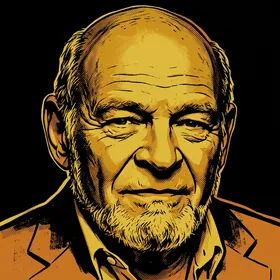
Sam Zell built a fortune buying things nobody else wanted, and this book is unusual in stating the decision rule rather than gesturing at it.
The rule, stated as arithmetic
“The basics of business are straightforward. It’s largely about risk. If you’ve got a big downside and a small upside, run the other way. If you’ve got a big upside and a small downside, do the deal. Always make sure you’re getting paid for the risk you take, and never risk what you cannot afford to lose.”
— Sam Zell, Am I Being Too Subtle? Most investing books take a chapter to say that and say it less clearly. Note the fourth clause, which is the one that constrains the first three: getting paid for risk is not the same as being able to survive it.
Where the opportunities come from
Zell’s method for finding them is mechanical rather than intuitive — he watches for gaps between supply and demand and waits for the lines to cross:
“If there’s one consistent theme, it’s that I’m always on the lookout for anomalies or disruptions in an industry, in a market, or in a particular company. Recognizing the psychology of market extremes can lead to attractive points of entry.”
— Sam Zell, Am I Being Too Subtle? The input is unglamorous and he is specific about the volume of it:
“I am a voracious consumer of information. I have honed my ability to digest a lot of information, sift out what’s potentially relevant, retain it, and then recall it when it’s useful. I read at least five newspapers every day, and five business magazines a week.”
— Sam Zell, Am I Being Too Subtle?
Where to be sceptical
The rules are clean; the conditions for applying them are not. Zell’s returns came substantially from buying distress — which requires available capital at the moment everyone else is frozen, and a willingness to be called a vulture in print. He is proud of both. Neither is a rule you can adopt by deciding to.